
RK3576 Motherboard PCBA Design and Custom OEM/ODM Services
Apr 27,2026
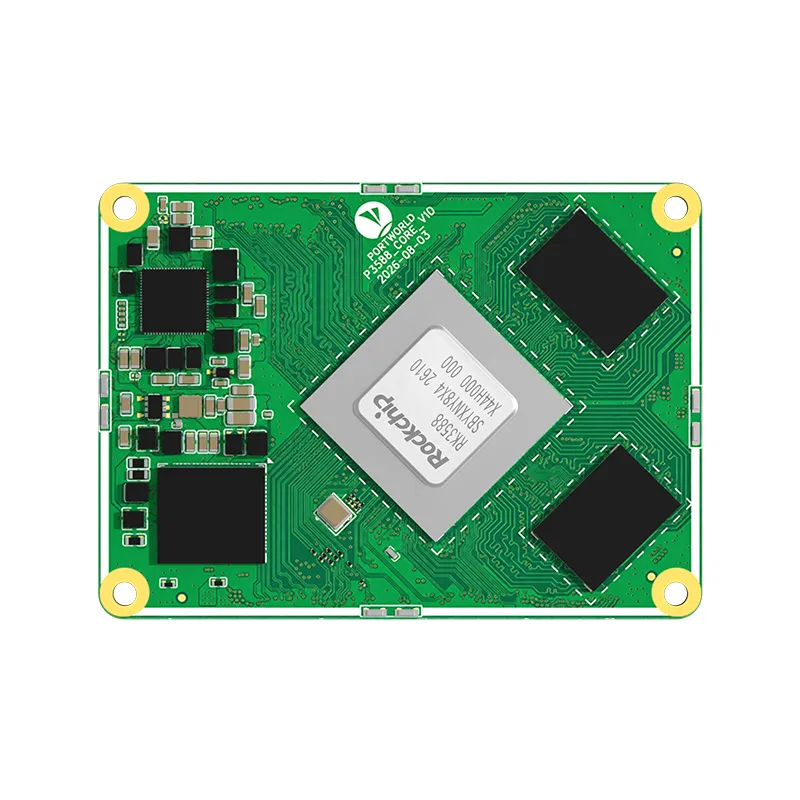
The Next-Gen RK3588 Core board
Powerful, AI-Driven, High-Performance.Shop Now>


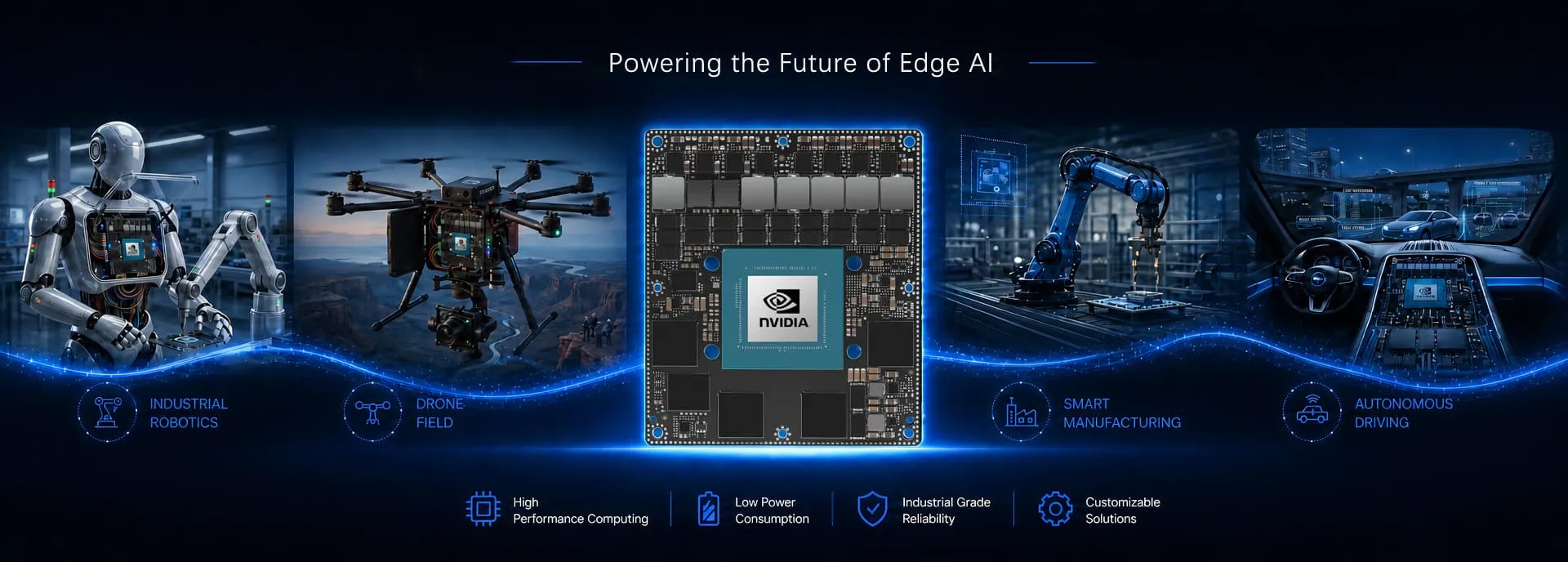


Artificial intelligence is expanding beyond cloud computing and conventional data centers. Increasingly, it is being deployed directly in robots, industrial equipment, smart cameras, autonomous vehicles, and intelligent commercial devices. This move toward edge AI is reshaping how businesses design and deploy smart hardware.
NVIDIA is a key contributor to this transformation. Renowned for its GPU technology and AI computing ecosystem, the company has extended its reach into embedded computing with the Jetson platform. These compact computing solutions allow developers to run AI models, analyze visual data, and build intelligent systems directly on edge devices.
Rising demand for robotics, machine vision, and autonomous systems is creating new opportunities for embedded hardware powered by NVIDIA Jetson. For manufacturers and system integrators, selecting the right computing platform has become an essential part of product development.
Why NVIDIA Is Emerging as a Major Force in Edge AI
Traditional AI applications often rely on cloud servers to process data and produce results. Although cloud computing provides substantial processing capacity, it can also create network delays, increase bandwidth costs, and depend on reliable connectivity.
Edge AI helps overcome these challenges by placing computing capabilities closer to the devices that collect and use the data.
NVIDIA has built a broad AI ecosystem spanning accelerated computing hardware, software frameworks, development tools, and AI libraries. Its Jetson platform is purpose-built for embedded AI applications, where processing power, energy use, and device size are all important considerations.
In August 2026, NVIDIA announced the Jetson Orin Nano 2 for applications including robotics, delivery and inspection drones, and vision AI systems. According to NVIDIA, the new platform provides twice the inference performance of its predecessor while using 40% less power at equivalent performance. The announcement also underscored the growing community of developers and hardware partners creating edge AI solutions.
This launch illustrates a wider industry trend: increasingly sophisticated processing is shifting from centralized infrastructure to compact devices designed for specific applications.
What Is NVIDIA Jetson, and How Does It Work?
NVIDIA Jetson is a series of embedded computing platforms built for AI and accelerated computing at the edge.
Unlike conventional embedded boards, which are generally used for basic control and data processing, Jetson platforms can manage more demanding workloads, such as computer vision, deep learning inference, image recognition, and robotic perception.
A typical system built on NVIDIA Jetson brings together several key components:
Peripheral connectivity: Links cameras, sensors, displays, networking modules, and external controllers.
The NVIDIA Jetson ecosystem also offers developers software tools for working with AI models, robotics frameworks, and computer vision applications.
For hardware manufacturers, Jetson provides a platform for creating specialized AI products without having to design an entire computing architecture from scratch.
Where NVIDIA Edge AI Is Unlocking New Opportunities
The growing availability of compact AI computing platforms is broadening the range of applications that can operate intelligently at the edge.
1. AI Robotics and Humanoid Robots
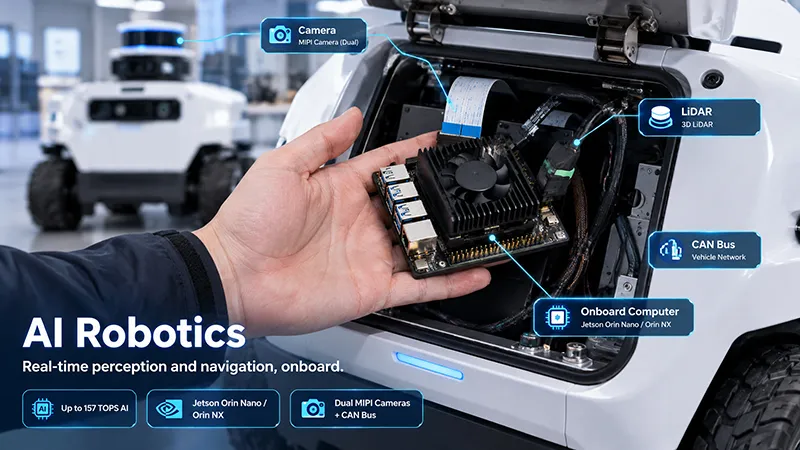
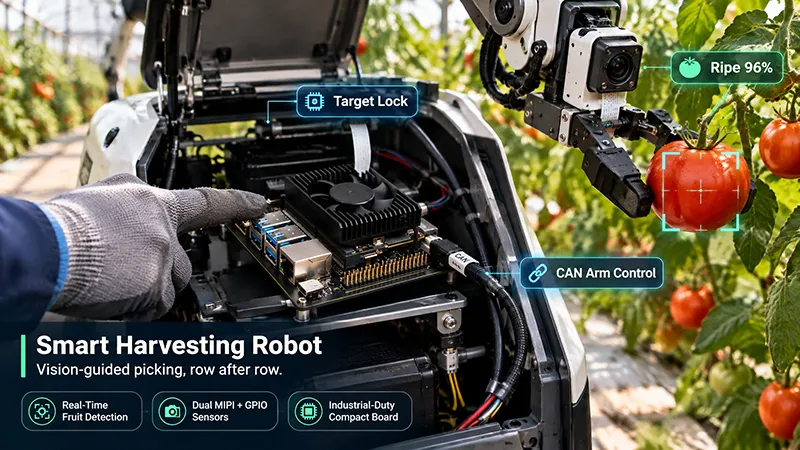
Robots must interpret their surroundings, identify objects, process sensor data, and adapt to changing conditions.
An embedded computer based on NVIDIA Jetson can act as the central computing platform for these functions. It can process camera feeds, enable object detection, and coordinate data from multiple sensors.
Potential applications include:
As robots become increasingly autonomous, demand will continue to rise for compact computing platforms with powerful AI capabilities.
2. Machine Vision and Industrial Inspection
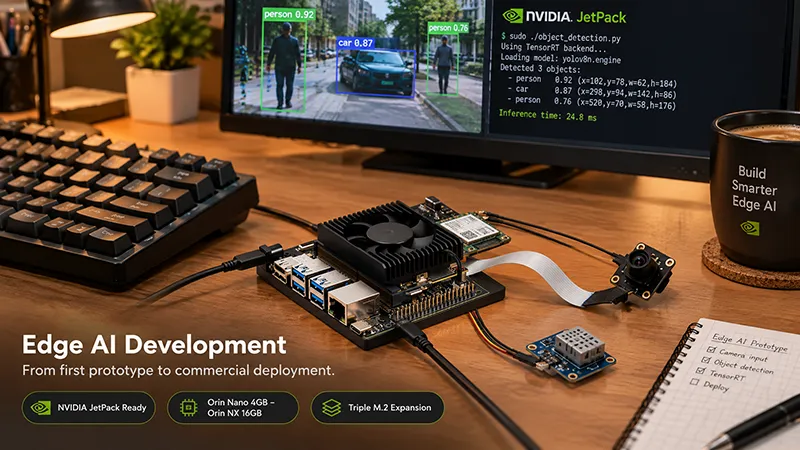
Machine vision is another significant application of NVIDIA edge AI.
In manufacturing settings, AI-enabled vision systems can examine images and video to detect defects, identify components, track production processes, and flag unusual conditions.
Rather than transmitting every image to a remote server, an embedded AI computer can analyze visual data on site. This can shorten response times and limit unnecessary network traffic.
Common uses include automated optical inspection, product classification, barcode reading, production-line monitoring, and equipment inspection.
3. AI-Powered Drones and Autonomous Systems
Drones and autonomous machines often operate where network connections are limited or unreliable.
With onboard edge computing, these devices can process camera feeds, detect objects and obstacles, and make navigation decisions locally.
NVIDIA Jetson platforms support applications such as agricultural drones, infrastructure inspection, logistics delivery, and environmental monitoring.
When developing these products, teams must consider hardware size, power consumption, thermal design, and camera connectivity as an integrated system.
4. Smart Cameras and Intelligent Video Analytics
AI-enabled cameras are advancing beyond simple recording and motion detection.
Equipped with embedded AI computing, smart cameras can perform tasks such as counting people, recognizing objects, detecting vehicles, analyzing behavior, and monitoring security.
These applications benefit from on-device processing, which allows video to be analyzed locally rather than requiring continuous transmission of large volumes of footage to cloud infrastructure.
5. Smart Healthcare and Commercial Devices
Edge AI is increasingly being used in healthcare terminals, interactive kiosks, intelligent displays, and other commercial equipment.
Embedded computing platforms can enable image analysis, voice interaction, intelligent user interfaces, and connected-device management.
For manufacturers developing these products, a customizable mainboard can streamline hardware integration and offer a more stable foundation for long-term deployment.
How to Select the Right NVIDIA Jetson Embedded Platform
AI applications do not all require the same computing capacity. When choosing an embedded platform, start with the final product’s actual needs instead of defaulting to the highest available AI performance specification.
Consider several key factors.
AI Computing Performance
Assess the complexity of the AI models, the number of camera streams, and the anticipated inference workload. Applications that use multiple cameras or more sophisticated vision models may need a higher-performance platform.
Power Consumption and Thermal Management
Robots, drones, and compact industrial devices often face tight power and space constraints. Evaluate the processor, cooling solution, enclosure, and power supply as a complete system.
Camera and Display Interfaces
Camera connectivity is particularly important in robotics and machine vision. Verify that the platform supports the required camera interfaces, display outputs, USB connections, and other peripherals.
Networking and Industrial Connectivity
Ethernet, wireless connectivity, and support for external controller interfaces can affect how seamlessly a system integrates with an existing product. Industrial applications may also call for additional communication interfaces and custom carrier-board designs.
Operating System and Software Support
Software compatibility is another key factor. Developers should assess the required operating system, driver support, SDK availability, AI frameworks, and ongoing software maintenance needs.
Hardware Customization and Production
A development kit may meet initial testing needs, but commercial products often require a custom carrier board, optimized interfaces, mechanical integration, and production-ready hardware.
An experienced embedded hardware manufacturer can help bridge the transition from development to mass production.
Portworld NVIDIA Jetson Embedded Computing Solutions
Portworld provides embedded computing hardware and customization services based on NVIDIA Jetson platforms for businesses developing AI-powered products.
Its NVIDIA-based board solutions include the YC-N1902 and YC-N2401, designed for embedded AI applications such as robotics, machine vision, industrial automation, and intelligent edge devices.
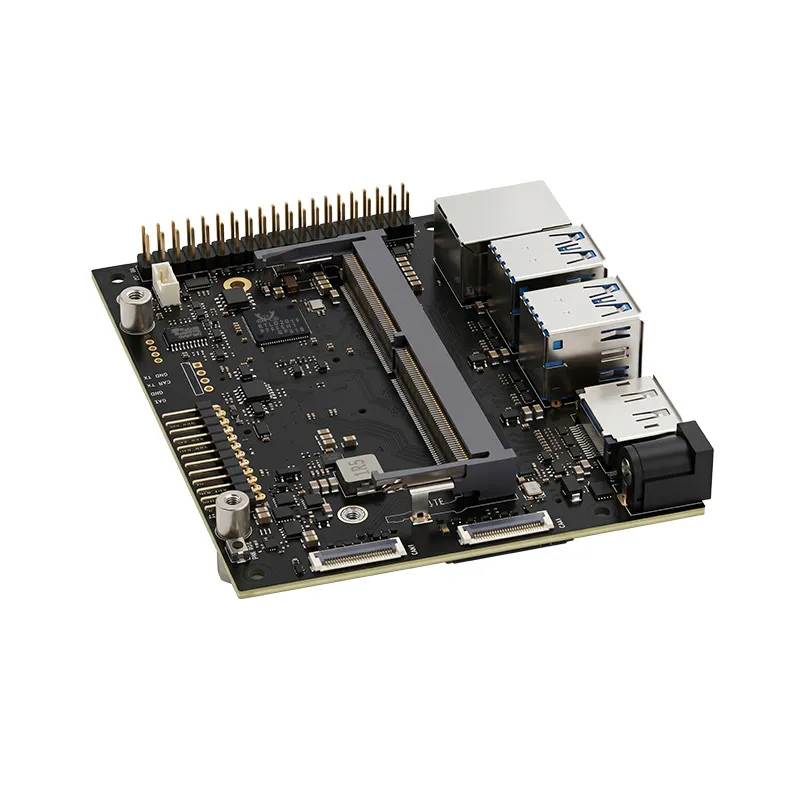
YC-N1902 NVIDIA Jetson AI Board
The YC-N1902 is built around the NVIDIA Jetson Orin Nano/NX platform and supports AI computing in compact embedded systems.
Delivering up to 157 TOPS of AI computing performance, depending on the selected configuration, it offers a computing foundation for demanding edge AI applications.
Potential applications include:
Smart automation equipment
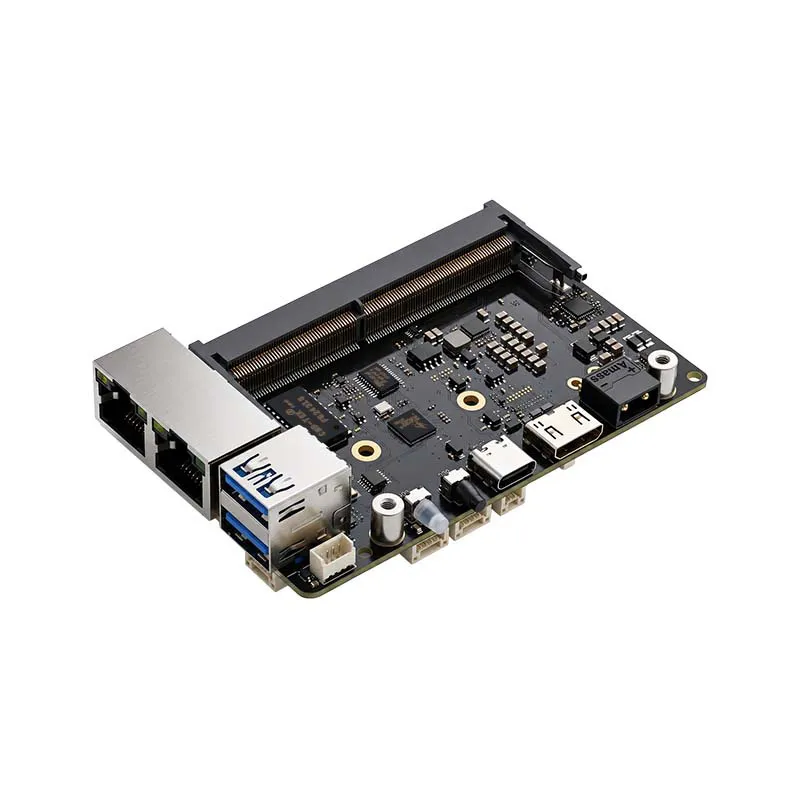
YC-N2401 NVIDIA Jetson Embedded Board
The YC-N2401 is an embedded computing platform designed for AI applications that require adaptable networking and power integration.
Its key features include:
NVIDIA Jetson Orin Nano/NX platform options
1GbE and 2.5GbE Ethernet connectivity
Wide-range power input from 9.5 to 30V
These features make the board well suited to industrial edge devices, networked AI systems, robotics, and other embedded applications.
For configuration details, developers should consult the Portworld engineering team to confirm the Jetson module, memory, interfaces, and software requirements.
Beyond the Board: The Importance of OEM/ODM Customization
A high-performance processor alone cannot ensure the success of an embedded AI product.
Commercial deployment often calls for a complete hardware solution tailored to the application's mechanical, electrical, and software requirements.
Portworld offers OEM/ODM services to support the development of customized embedded computing platforms, including:
Hardware customization: Carrier board design, PCB/PCBA development, interface configuration, and peripheral integration.
Software customization: Operating system adaptation, BSP support, driver integration, and assistance with application-level development.
Mechanical integration: Board dimensions, connector positioning, enclosure compatibility, and thermal design considerations.
Development resources: SDK packages, technical documentation, schematics, and engineering assistance.
Production services: Prototype development, small-batch manufacturing, and support for mass production.
From initial hardware assessment through customized board development and manufacturing, Portworld helps businesses create embedded computing solutions tailored to their product requirements.