RK3576 Motherboard PCBA Design and Custom OEM/ODM Services
Apr 27,2026
The Next-Gen RK3588 Core board
Powerful, AI-Driven, High-Performance.Shop Now>


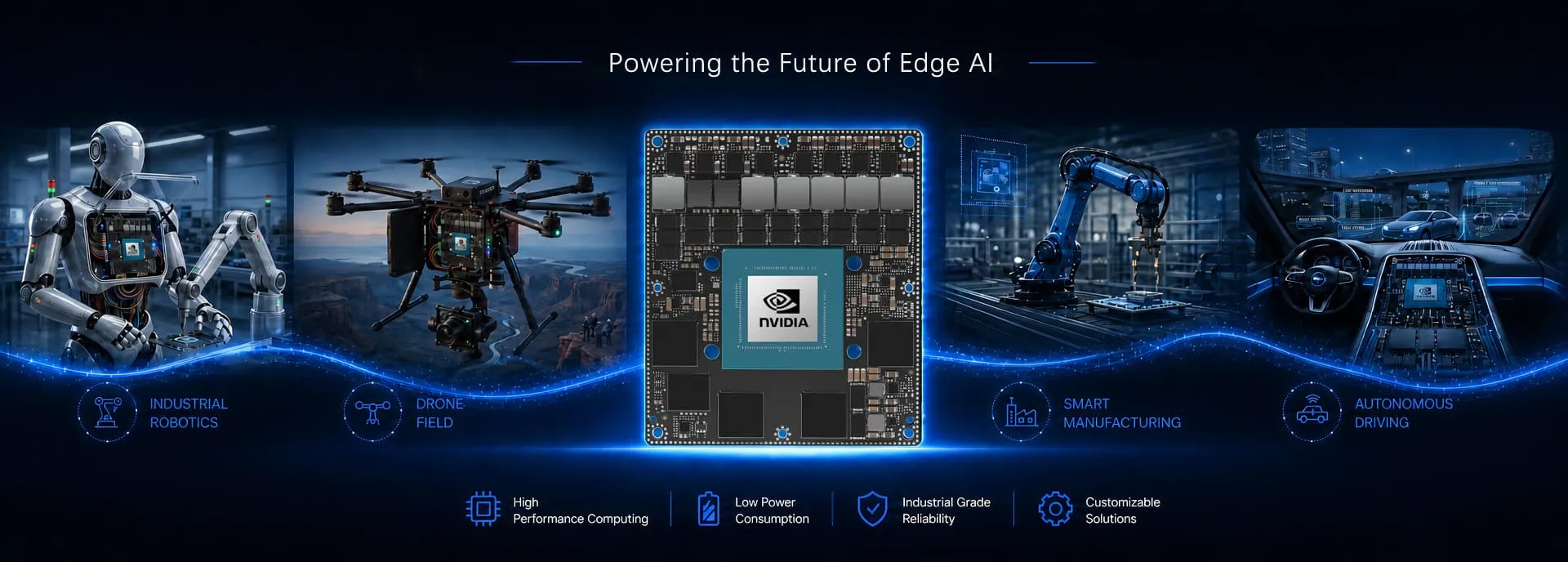


Edge AI is changing how intelligent devices process information. Instead of sending every image, sensor reading, or video stream to a remote server, embedded systems can analyze data locally and respond closer to where the data is generated. This approach is increasingly relevant to machine vision, robotics, smart retail, industrial monitoring, and intelligent terminals.
For developers building these products, choosing an appropriate computing platform is an important early decision. A processor must provide enough CPU performance for application software, sufficient AI acceleration for inference workloads, suitable interfaces for cameras and peripherals, and a practical path from prototype to mass production.
The Rockchip RK3576 core board is one option worth evaluating for embedded edge AI projects. Combining an octa-core CPU, an integrated AI NPU, a Mali-G52 GPU, and advanced multimedia capabilities, the RK3576 provides a platform for applications that need more than basic embedded processing. Rockchip's published specifications list a 6 TOPS NPU and support for multiple AI precision formats, including INT4, INT8, INT16, and FP16. Actual performance depends on the model, software runtime, and workload configuration.
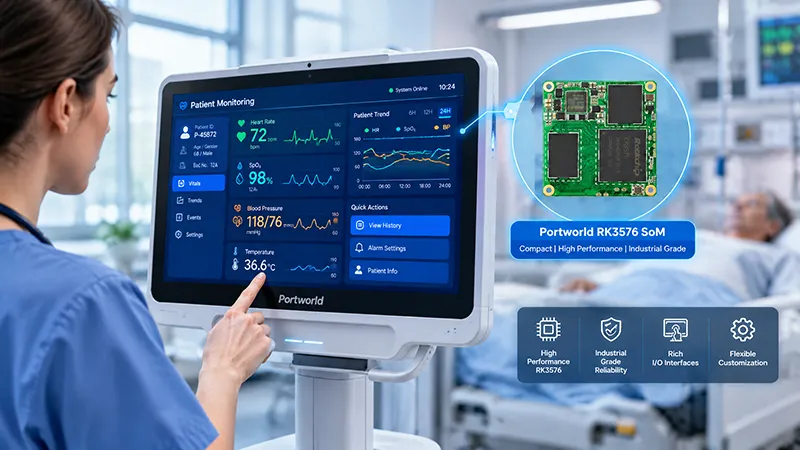
This guide explains how to evaluate an RK3576 core board, which specifications matter most for edge AI, and how a compact module such as Portworld's YC-Core3576 can fit into a customized embedded system.
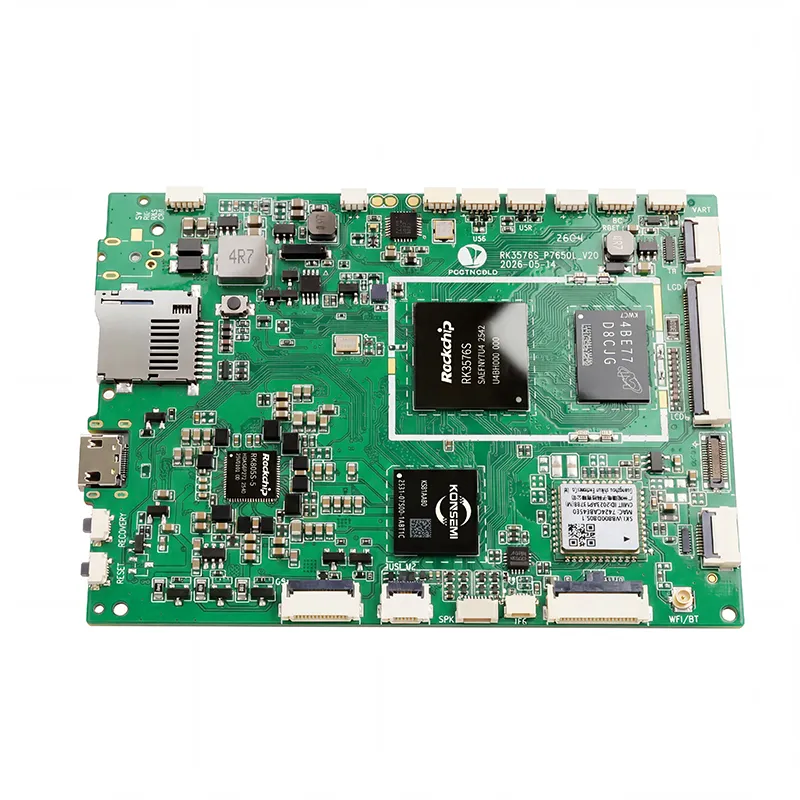
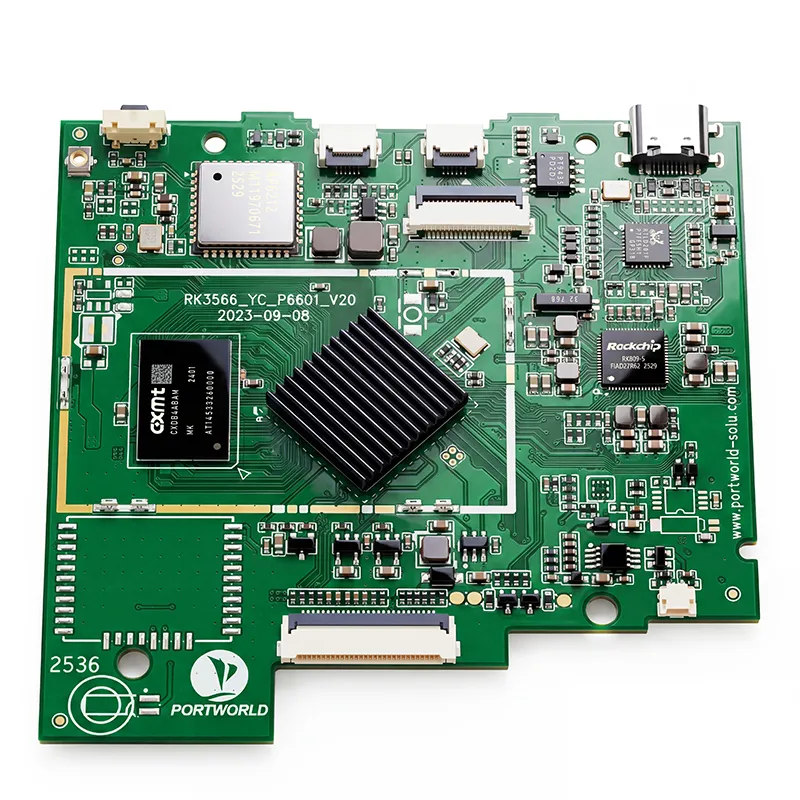
An RK3576 core board refers to a computing module centered around the Rockchip RK3576 system-on-chip. This type of core board, also known as a System on Module (SoM), consolidates the primary computing elements into a compact unit that interfaces with a carrier board.
The RK3576 processor features four Cortex-A72 CPU cores, which can operate at speeds of up to 2.2 GHz, alongside four Cortex-A53 cores that function at a maximum of 1.8 GHz. Additionally, it incorporates Mali-G52 MC3 graphics and an AI NPU. The platform is compatible with both Android and Linux-based development environments, with the precise software setup varying based on the module and board manufacturer.
This architecture provides developers with a variety of processing capabilities for diverse tasks. The CPU is responsible for executing application logic, managing communications, and overseeing system services. The GPU is tasked with rendering supported graphics and handling parallel workloads, while the NPU is designed to accelerate neural-network inference for compatible applications.
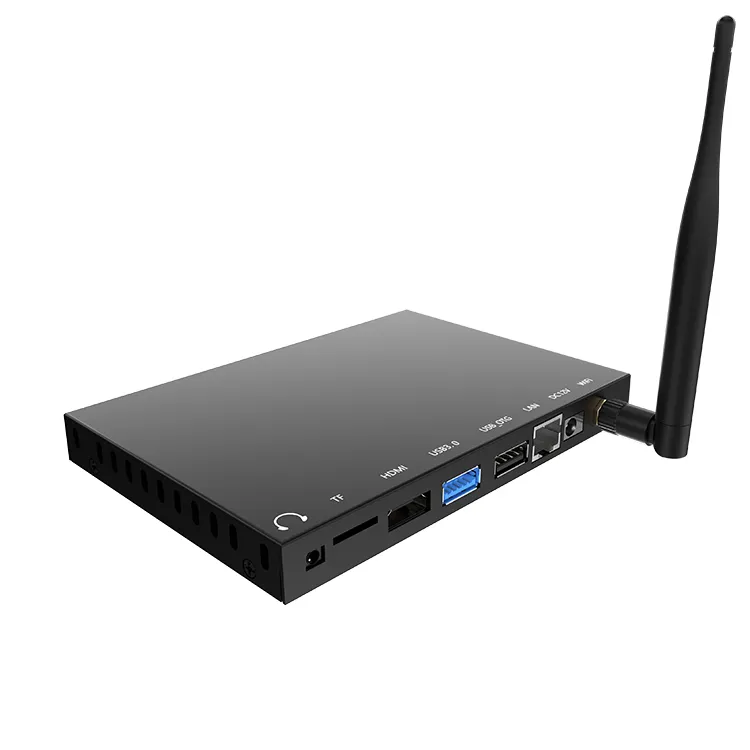
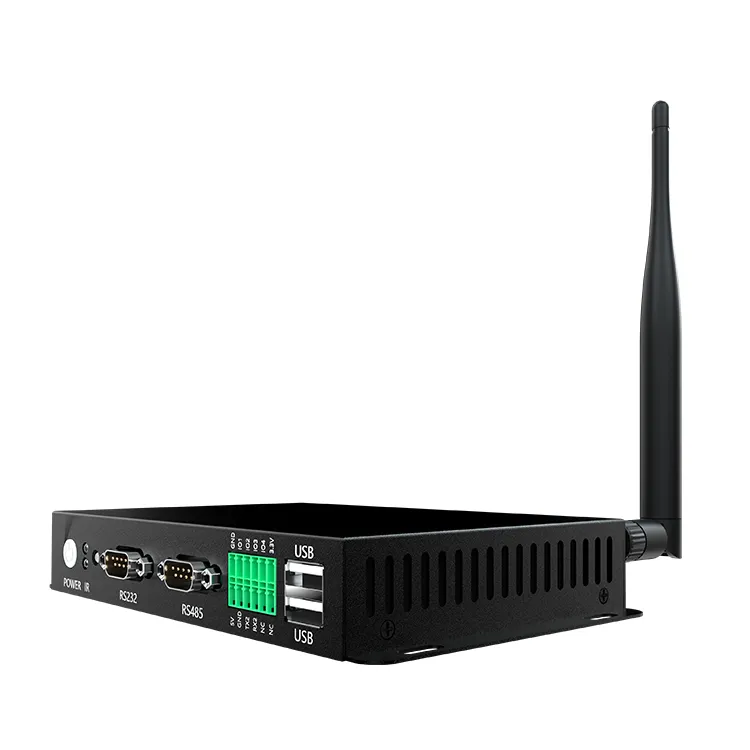
The core board interfaces with a carrier board that supplies the necessary connections for the final product. Depending on the design of the module, this may encompass camera interfaces, Ethernet, USB, display outputs, storage options, serial communication, and power input.
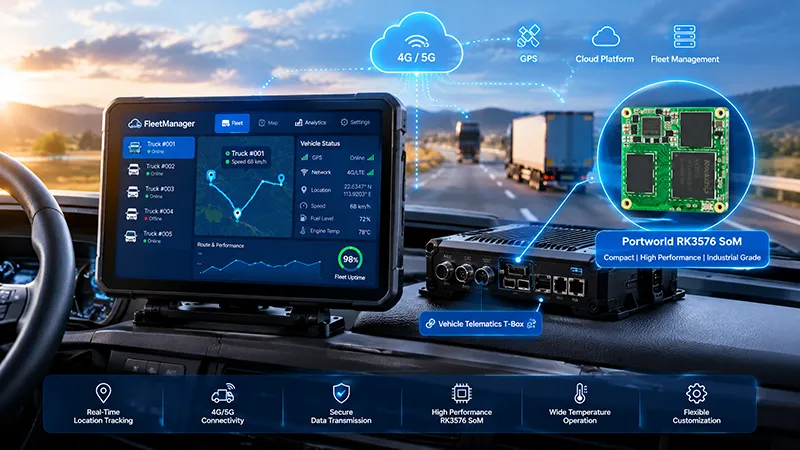
This division proves advantageous for OEM and ODM projects, as the same computing module has the potential to accommodate various products through distinct carrier-board designs.
1. Assess AI Performance Beyond the TOPS Rating
AI performance is frequently one of the primary specifications that engineers evaluate when choosing an edge AI board. Nevertheless, the NPU's TOPS rating serves merely as an initial benchmark.
The Rockchip RK3576 features an NPU with a rating of up to 6 TOPS, supporting INT4, INT8, INT16, FP16, BF16, and TF32 formats as outlined in the processor specifications. Additionally, Rockchip indicates compatibility with deep-learning frameworks and associated deployment environments, such as TensorFlow, TensorFlow Lite, PyTorch, Caffe, and ONNX-related workflows. It is essential to confirm the specific model conversion and runtime path for the selected software stack.
For an actual project, the more critical inquiry is whether the intended AI model can operate efficiently on the chosen hardware.
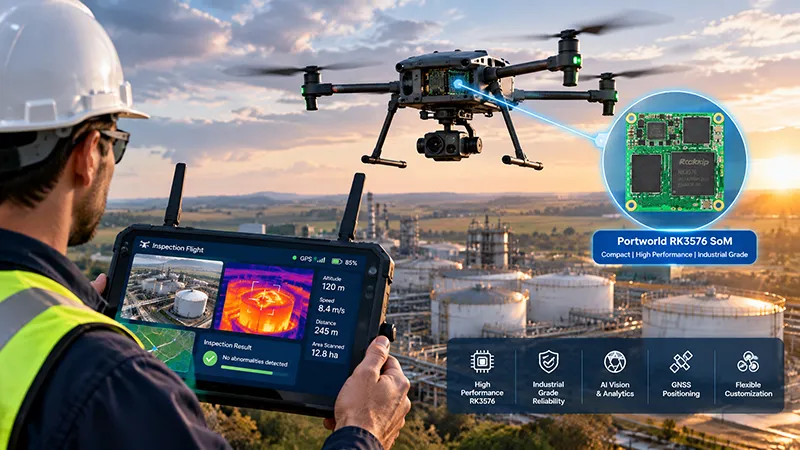
For instance, an industrial defect detection system might analyze images from a production line. A smart camera could recognize objects or categorize visual scenes. A compact robot may utilize AI inference to interpret the camera's input before relaying the results to its control software.
Each workload presents distinct requirements regarding model size, input resolution, inference frequency, memory bandwidth, and latency. While quantization can decrease model size and enhance inference efficiency, it may also impact accuracy. Developers ought to benchmark their actual models instead of presuming that a TOPS rating directly correlates to a specific number of frames per second.
When assessing an RK3576 core board, it is essential to verify whether the vendor supplies the necessary NPU runtime, conversion tools, example projects, and software documentation. These resources can greatly affect development time.
2. Align CPU and GPU Resources with the Entire Application
An edge AI product seldom operates an AI model in isolation. It may also require capturing camera data, decoding video, managing a graphical interface, communicating with cloud services, storing results, and controlling external hardware.
The RK3576 features a combination of Cortex-A72 and Cortex-A53 CPU cores, enabling it to handle application processing in conjunction with background tasks. Its Mali-G52 MC3 GPU delivers the necessary graphics capabilities for rendering and computing workloads that are supported.
Consider an intelligent inspection terminal. The software for such a terminal may capture images, preprocess input data, execute a detection model, present inspection results, and transmit production records to a factory information system. The NPU can enhance compatible inference, while the CPU oversees application logic and communication.
This underscores the importance of selecting a core board based on the entire software workload rather than solely on AI acceleration. Developers should also take into account RAM capacity, storage, operating system overhead, graphics requirements, and the number of concurrent services.
3. Verify Camera, Video, and Display Specifications
Numerous edge AI initiatives rely on visual data. An appropriate computing platform must facilitate not only AI inference but also the camera input and the associated video-processing pipeline.
Rockchip's RK3576 specifications feature a 16-megapixel image signal processor (ISP), MIPI CSI-2 camera interfaces, and video decoding capabilities that support resolutions up to 4K at 120 fps for compatible codecs and configurations. Additionally, the processor accommodates high-resolution display outputs, although the specific interfaces available on a given core board are contingent upon its pinout and carrier-board design.
These features may be pertinent to:
Video analytics devices: Evaluating visual input while managing display or recording tasks.
The stated resolution and frame rate do not inherently ensure that every camera and video pipeline can function concurrently at their peak specifications. Factors such as sensor compatibility, interface lane configuration, memory bandwidth, codec support, thermal conditions, and software drivers must all be taken into account.
Prior to selecting a core board, it is essential to document the camera sensor, the necessary resolution, the desired frame rate, the display configuration, and the anticipated number of concurrent streams.
4. Evaluate Module Size and Carrier-Board Integration
The physical size of a core board can influence its compatibility with a compact enclosure or its ability to provide sufficient PCB space for additional components.
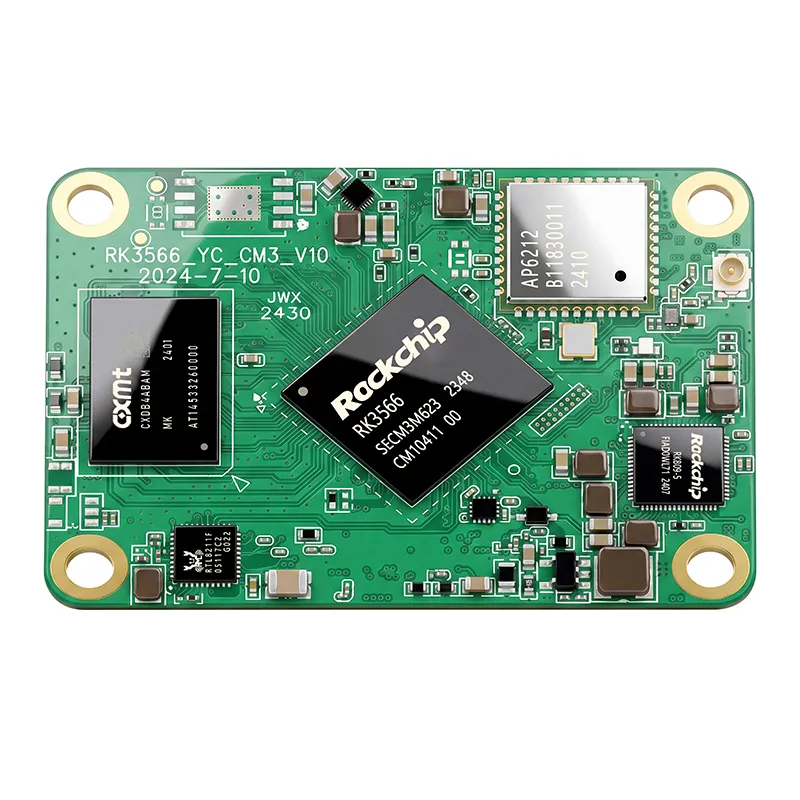
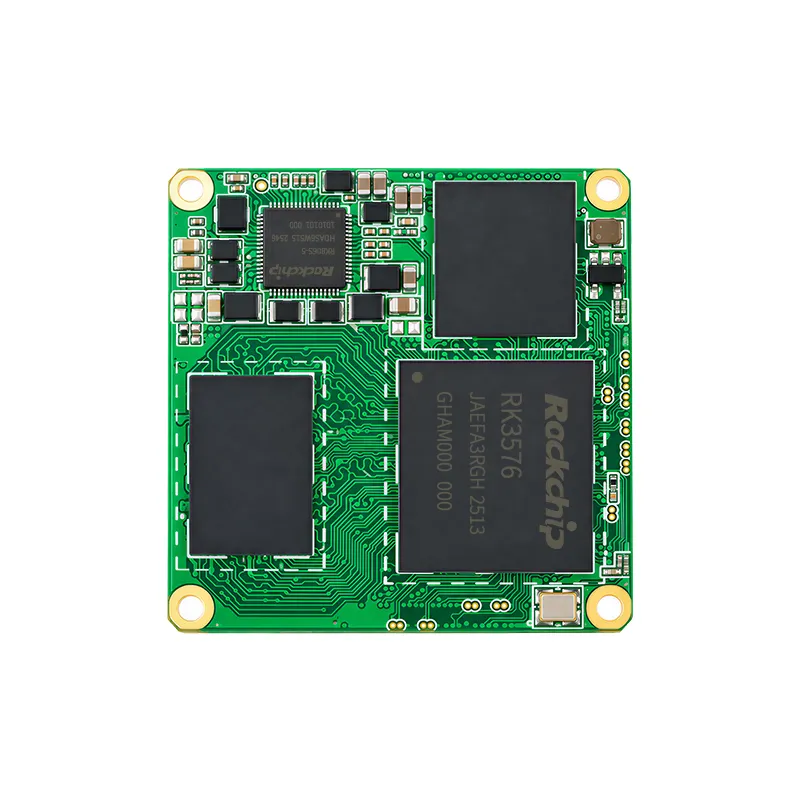
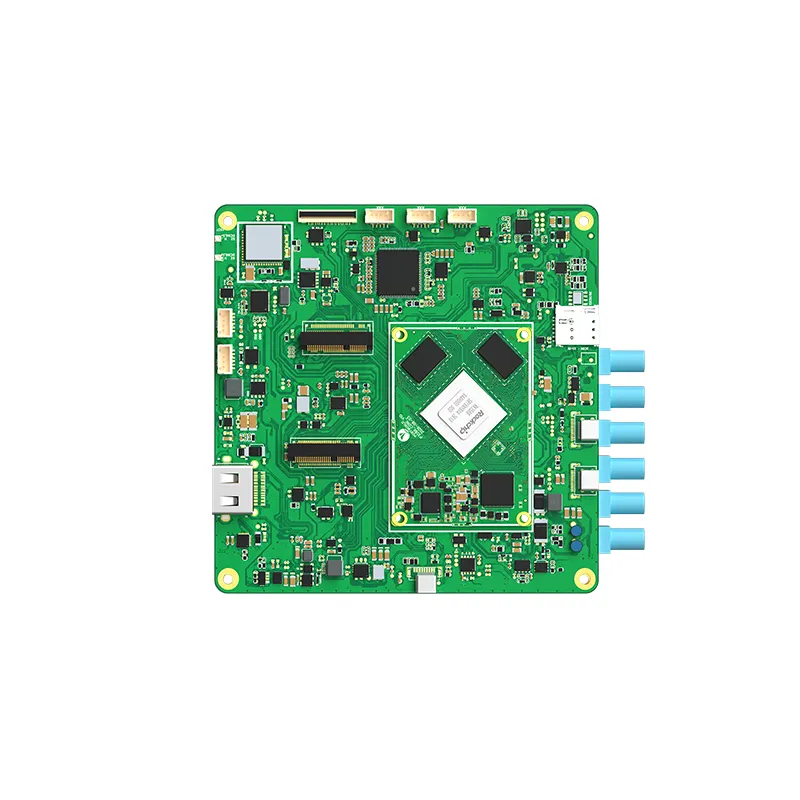
Portworld's YC-Core3576 is a compact core board based on the RK3576, with dimensions of 38 × 38 mm. As per the provided product specifications, it utilizes a 240-pin board-to-board (BTB) connector and features a 12-layer gold PCB, meticulously designed to ensure electromagnetic compatibility, effective thermal management, and signal stability.
This module is designed for embedded applications where space-efficient integration is crucial. Its board-to-board connector facilitates the connection between the core module and a carrier board tailored for the specific application.
For instance, a manufacturer creating a compact machine vision controller may need to incorporate the core board, camera connectors, network ports, power circuitry, and mechanical mounting points within a confined enclosure. A well-designed carrier board enables the arrangement of these components in accordance with the product's requirements.
Nevertheless, a smaller module does not inherently lead to a more compact or straightforward final system. Engineers must still consider connector clearance, high-speed signal routing, heat dissipation, cable access, enclosure design, and manufacturing tolerances.
When assessing the YC-Core3576 or any other RK3576 module, it is advisable to obtain the hardware design guide, connector pinout, mechanical drawings, power specifications, and thermal guidelines prior to finalizing the carrier-board layout.
5. Examine Memory, Storage, and Power Design
AI applications can impose significant demands on system memory. Image processing, large input tensors, operating system services, and application software may all vie for the available RAM.
Rockchip's RK3576 platform accommodates LPDDR4, LPDDR4X, and LPDDR5 memory options, as well as storage technologies such as eMMC 5.1 and UFS 2.0. The configurations available are contingent upon the core board and its memory architecture.
For an edge AI initiative, the choice of memory should be guided by the size of the deployed model, camera resolution, concurrent processes, and anticipated software expansion. Storage needs will vary based on whether the device retains application data, images, video clips, logs, or locally deployed model files.
Power design is equally important. A module may operate within a particular input-voltage range, but the completed system must also supply the required current to the processor, memory, cameras, network interfaces, and other peripherals. Peak loads and startup behavior should be included in the power budget.
Portworld's YC-Core3576 uses a single 5V power input and an integrated RK806S-5 PMIC, according to its supplied product information. This arrangement is intended to simplify power integration and help reduce carrier-board component costs. The actual savings depend on the carrier-board design and the components required by the application.
Thermal design should be validated under sustained workloads. AI inference and video processing can generate different heat profiles from light desktop-style operation, so testing should use realistic application workloads inside the intended enclosure.
Portworld YC-Core3576 for Tailored Edge AI Solutions
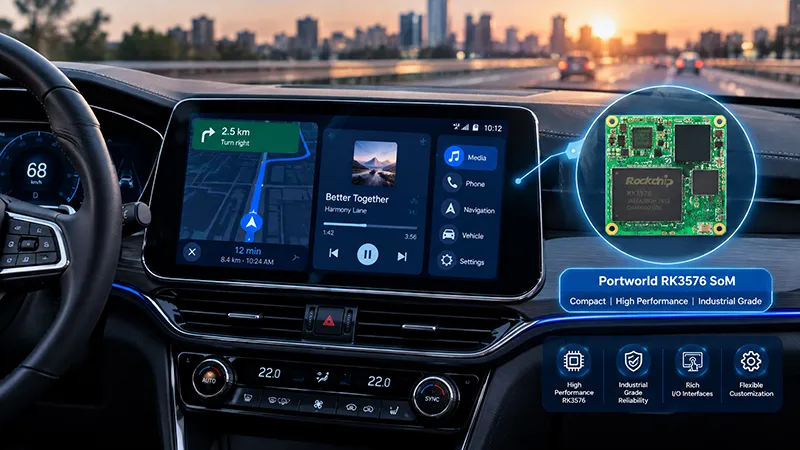
Portworld's YC-Core3576 offers a hardware platform based on the RK3576, designed for developers creating compact embedded computing solutions. The specifications provided include a 38 × 38 mm form factor, an octa-core CPU, Mali-G52 graphics, integrated AI acceleration, 4K@120fps video decoding, a 16-megapixel ISP, a 240-pin BTB connector, and integrated RK806S-5 power management.
This module is suitable for evaluating projects related to edge AI inference, machine vision, smart cameras, intelligent terminals, and embedded multimedia. The ultimate compatibility will depend on the AI model of the application, necessary interfaces, memory configuration, thermal constraints, and software environment.
Portworld also offers support for OEM and ODM development in embedded hardware projects. Depending on the specific project needs, engineering assistance may encompass carrier-board design, PCB and PCBA customization, interface integration, operating system adaptation, BSP and SDK support, and hardware-software integration.
For clients requiring more than a standard module, this approach allows for the adaptation of the computing platform to fit a particular enclosure, peripheral set, communication interface, or application workflow.
Prior to initiating a customization project, it is advisable to prepare a requirements document that outlines the AI model, camera specifications, necessary interfaces, operating system, power budget, environmental conditions, production volume, and anticipated product lifecycle. This documentation provides the hardware supplier with a clearer foundation for evaluating feasibility and planning prototypes.