
RK3576 Motherboard PCBA Design and Custom OEM/ODM Services
Apr 27,2026
The Next-Gen RK3588 Core board
Powerful, AI-Driven, High-Performance.Shop Now>


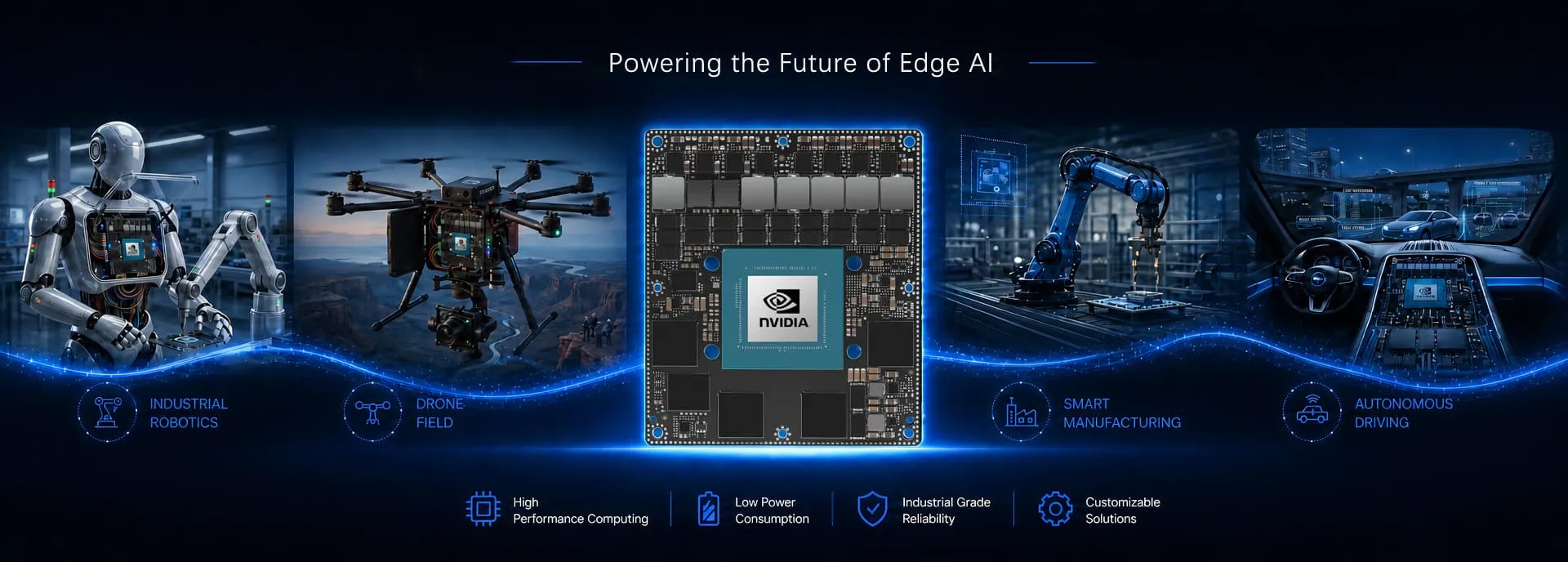


Industrial embedded systems are experiencing increased connectivity, heightened intelligence, and greater specialization. Spanning from industrial human-machine interface terminals and equipment control units to edge computing gateways, intelligent display systems, and device monitoring solutions, developers require computing platforms capable of delivering consistent performance while accommodating the interfaces, operating systems, and hardware specifications essential to their applications.
The Rockchip RK3568 represents a compelling platform option for such initiatives. Equipped with a quad-core ARM Cortex-A55 processor, Mali-G52 graphics processing unit, embedded neural processing unit, and comprehensive connectivity capabilities, it establishes a robust foundation for embedded applications that integrate control functionality, communication protocols, multimedia capabilities, and edge-based artificial intelligence processing. Nevertheless, selecting an RK3568 mainboard extends beyond processor selection alone. The board must additionally satisfy the electrical, mechanical, software, and manufacturing specifications demanded by the target application.
Accordingly, what methodology should guide your selection of an RK3568 mainboard for an industrial embedded system?
Commence by Establishing the Genuine Specifications of Your Embedded Application
Prior to evaluating mainboards, ascertain the functional requirements that your device must fulfill within its designated operational context.
An industrial human-machine interface, for instance, may be obligated to execute a graphical user interface in perpetual operation, facilitate communication with peripheral controllers, and operate a touchscreen display. An industrial gateway device may emphasize multiple Ethernet interfaces, serial communication capabilities, protocol translation functionality, and centralized device administration. A vision-based surveillance terminal may demand camera input interfaces, integrated hardware-based video decoding, and on-device artificial intelligence processing.
While these applications can all leverage the RK3568 platform, their respective mainboard specifications differ substantially.
Initiate the process by determining the application's core computational demands, the quantity and classification of interfaced devices, necessary display connectivity options, mandatory communication standards, physical operating conditions, and anticipated operational duration. These specifications form a comprehensive baseline for mainboard selection and facilitate the elimination of superfluous hardware expenditures.
Evaluate RK3568 Processing Performance and AI Capabilities
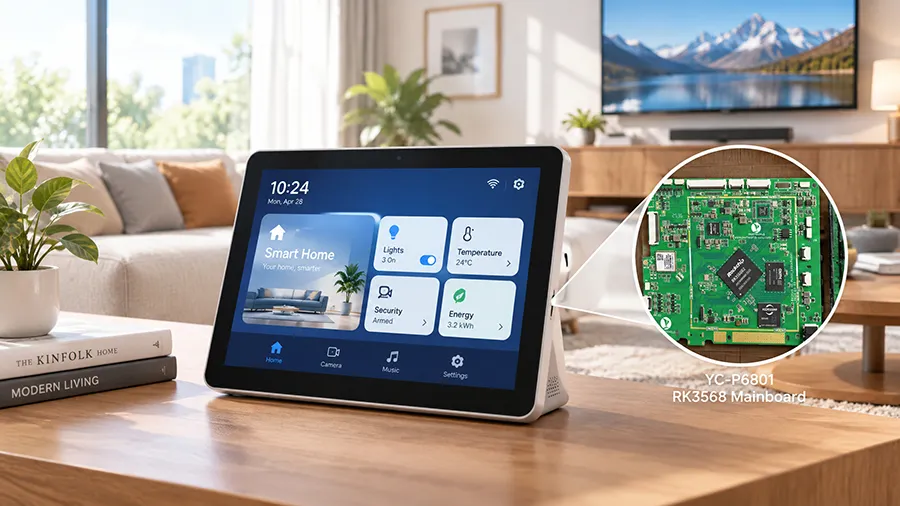
The RK3568 features four ARM Cortex-A55 CPU cores running at up to 2.0 GHz, an ARM Mali-G52 GPU, and an integrated NPU rated at up to 1 TOPS under the applicable operating conditions and precision. It also supports hardware-accelerated multimedia processing, including 4K video decoding. These capabilities make it suitable for many embedded computing and control applications.
For an industrial control terminal, the CPU can handle application logic, device communication, background services, and user-interface operations. The GPU helps render graphical interfaces and visual content, while hardware video acceleration can reduce the CPU workload when processing supported video formats.
The integrated NPU can also support selected AI inference tasks, such as object detection, image classification, or equipment-status recognition, when the model is compatible with the available inference software and supported operations.
However, an integrated NPU does not automatically guarantee that every AI model will run efficiently. Model architecture, quantization, runtime compatibility, memory bandwidth, and preprocessing requirements all influence actual performance. If AI is an essential part of the project, test the intended model on the target board before finalizing the hardware design.
For applications involving several high-resolution camera streams, complex vision models, or substantial AI workloads, evaluate whether the RK3568 provides enough performance headroom or whether a higher-performance platform would be more appropriate.
Verify Industrial Interfaces Prior to Selecting Your Board
Within industrial embedded systems, interface compatibility can prove equally critical as computational performance. Although a processor may incorporate support for a specific interface, this does not guarantee that every RK3568 mainboard implementation exposes that interface.
Ethernet connectivity represents a fundamental requirement for industrial gateways, networked controllers, and equipment monitoring systems. Certain RK3568 designs incorporate dual Gigabit Ethernet capabilities, which facilitate connection to separate networks or enable communication with multiple devices. It is essential to verify the precise Ethernet configuration, controller implementation, connector specifications, and driver support availability.
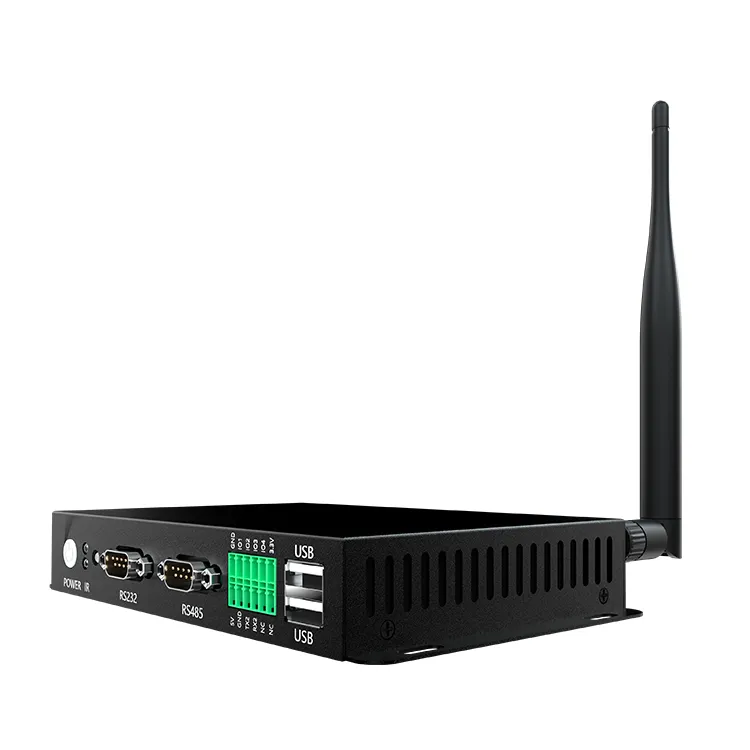
UART, RS232, and RS485 constitute standard requirements for interfacing with PLCs, meters, sensors, motor controllers, and legacy industrial equipment. Should the application necessitate serial communication, it is imperative to confirm the quantity of accessible ports, voltage specifications, isolation prerequisites, and connector pin configurations. Processor-level UART support does not inherently guarantee that a board incorporates a functional RS485 port ready for deployment.
CAN and other field interfaces may be necessary for specialized controllers, vehicles, and distributed equipment. Check whether the board exposes the required controller signals and whether additional transceivers or protection circuits are needed.
USB and expansion interfaces matter when connecting cameras, wireless modules, storage devices, or external peripherals. Depending on the design, PCIe, SATA, and SDIO can provide additional expansion options. Confirm which interfaces are routed to usable connectors and whether any share resources with other peripherals.
The most effective approach is to create an interface checklist before evaluating individual boards. This makes it easier to identify missing connections early, rather than discovering them after the enclosure and carrier board have already been designed.
Selecting the Appropriate Display and Camera Configuration
Industrial embedded systems frequently necessitate display and camera interfaces beyond conventional HDMI connectivity. Touchscreen terminals, control panels, intelligent displays, and machine-vision applications may require specialized display or camera interface specifications.
The RK3568 platform accommodates various display technologies including HDMI, eDP, MIPI-DSI, LVDS, and RGB, contingent upon the particular system architecture. Additionally, it facilitates camera connectivity through options such as MIPI CSI. The actual availability of these features is contingent upon the mainboard or carrier board specifications, connector design, display timing parameters, and the availability of appropriate software drivers. Rockchip RK3568 documentation
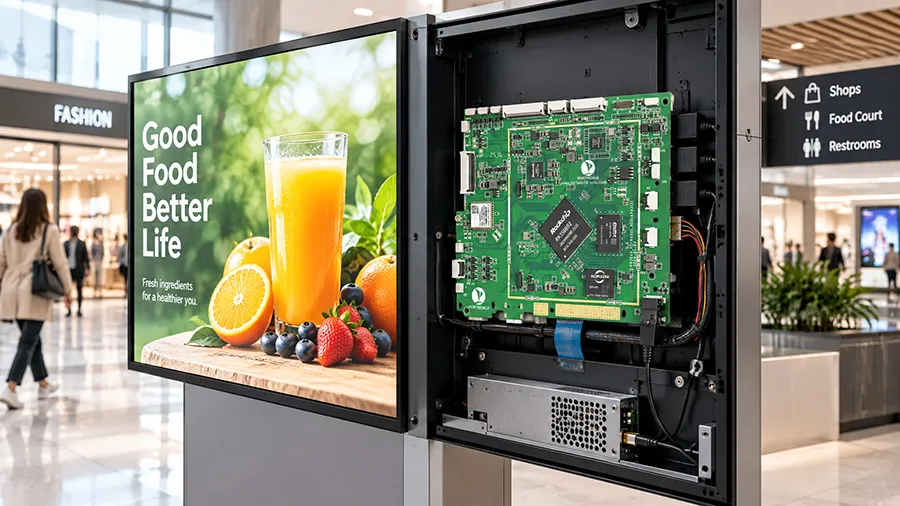
When evaluating a mainboard selection, it is essential to assess the comprehensive display configuration:
Screen dimensions and resolution: Verify that the display interface accommodates the specified resolution, refresh rate, and timing requirements.
Touchscreen incorporation: Determine whether the touch controller interfaces via USB or I2C and confirm the availability of the necessary driver.
Multiple display outputs: Establish the quantity of independent outputs available and whether concurrent output functionality is supported within the intended software environment.
Camera compatibility: Validate the camera sensor specifications, lane configuration, image signal processing requirements, and driver accessibility.
Mechanical compatibility: Assess connector positioning, cable management pathways, board dimensions, and mounting configuration requirements.
For products featuring customized display dimensions, non-standard aspect ratios, or specialized touch input mechanisms, the selection of a board predicated upon its accessible display connectivity options can substantially streamline the development process.
Determine Memory and Storage Requirements Throughout the Product Lifecycle
Memory and storage capacity exert direct influence on system performance responsiveness, application reliability, and sustained operational utility.
RK3568 mainboards are available with varying RAM allocations and storage arrangements. The optimal selection is contingent upon the operating system employed, the sophistication of applications, the quantity of connected peripherals, and whether data processing occurs on-device.
For a fundamental control system utilizing a minimal Linux operating system, a reduced memory configuration may prove adequate. A graphical human-machine interface executing multiple concurrent background processes may necessitate expanded RAM capacity. A platform executing numerous applications, database systems, or artificial intelligence computational tasks should be assessed based on actual memory consumption patterns rather than baseline initialization requirements.
The selection of storage technology warrants equivalent consideration. eMMC proves frequently appropriate for embedded applications requiring integrated storage and minimal physical footprint. SD cards may serve purposes in development environments or applications necessitating removable storage, whereas SATA or PCIe-based solutions can address scenarios demanding elevated storage capacity or data transfer rates, provided the selected board accommodates such interfaces.
Prior to initiating a production order, verify the accessible memory and storage configurations, boot methodology, firmware update procedures, and anticipated data-write volume. For systems designed for uninterrupted operation, evaluate filesystem architecture, logging intervals, behavior during power interruption, and storage durability characteristics.
Validate Operating System and Board Support Package Compatibility
Hardware compatibility represents merely one component of effective embedded system development. The board must additionally deliver a software infrastructure that facilitates the target application and permits ongoing support throughout the product's operational lifespan.
Contingent upon the board model and accompanying software distribution, RK3568 implementations may accommodate Android, Debian, Ubuntu, Buildroot, or alternative Linux-based environments. Refrain from presuming that all operating systems are universally accessible across all boards or that all peripherals demonstrate consistent functionality across disparate software distributions.
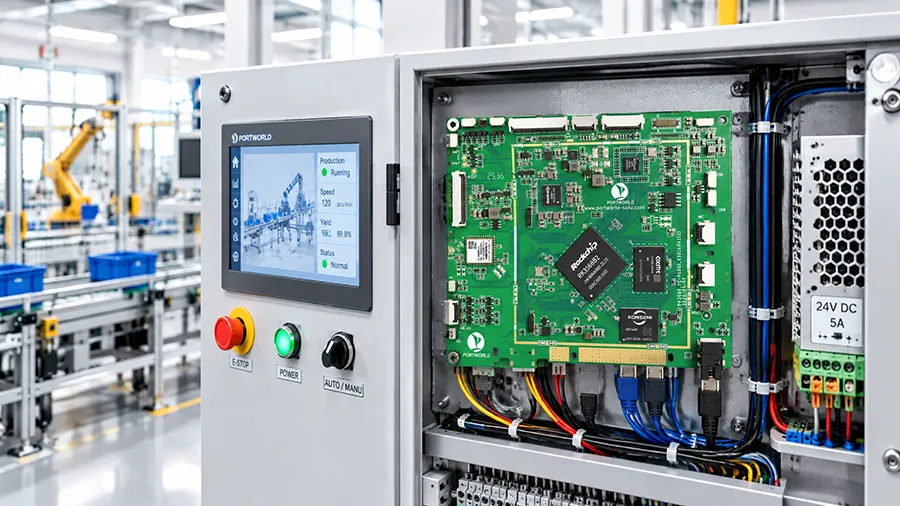
When assessing a supplier, inquire regarding:
Accessible operating system images and compatible kernel versions.
Board Support Package (BSP) and device-tree configuration.
Device drivers for Ethernet, serial ports, displays, touchscreens, cameras, and wireless modules.
SDK documentation, reference code, and diagnostic tools.
Over-the-air (OTA) or on-site firmware update capabilities.
Security patches, defect corrections, and extended software support.
Should your organization possess an existing application developed on Linux or Android, alignment with the current software architecture can substantially reduce development effort. For projects commencing from inception, assess both the supplier's technical support capabilities and the initial mainboard cost.
Evaluate Thermal Management, Power Requirements, and Operating Environment
An industrial embedded system may function within an enclosed housing, adjacent to industrial equipment, or in an area with restricted air circulation. Despite the processor delivering adequate computational capacity, inadequate thermal management can result in system instability or diminished performance during extended operation.
Examine the mainboard's power supply specifications, standard and maximum power draw, thermal output, and ventilation guidance. If the system will operate without interruption, conduct performance evaluation under representative operational conditions rather than depending exclusively on abbreviated benchmark assessments.
Environmental requirements also need to be defined early. Determine the expected operating temperature range, humidity, vibration exposure, electrical noise, and potential electrostatic discharge. A standard commercial board should not automatically be considered suitable for a demanding industrial environment.
Check the specified operating temperature range of the complete board, not just the processor. Industrial deployment may also require power protection, ESD protection, EMI mitigation, watchdog behavior, secure mounting, and appropriate enclosure design.
For equipment deployed across multiple sites, these details can have a greater impact on long-term reliability than a small difference in CPU performance.
Evaluate Customization and Long-Term Supply
An off-the-shelf RK3568 mainboard can be an effective starting point, but industrial products often have requirements that are difficult to meet with a standard configuration.
A project may need a particular connector layout, additional RS485 ports, isolated communication interfaces, a customized power input, a dedicated display connection, or a specific wireless module. In these cases, the ability to customize the hardware and software becomes an important selection criterion.
Discuss the following points with the supplier before committing to a design:
Whether the board can be customized at the PCB, PCBA, or carrier-board level.
Whether the required connectors and communication interfaces can be added or repositioned.
Whether the supplier can provide BSP adaptation, driver development, and operating system customization.
Whether the project needs a customized enclosure, mounting method, or thermal solution.
Whether production testing, documentation, and firmware version control are available.
Whether component sourcing, product lifecycle planning, and repeat production can be supported.
A low-cost development board may be suitable for prototyping, but a commercial industrial product requires a repeatable manufacturing process and a clear support plan. The objective is to select a platform that works not only for the first prototype, but also for deployment, maintenance, and future production batches.
Portworld's RK3568 Mainboard Solutions for Industrial Applications
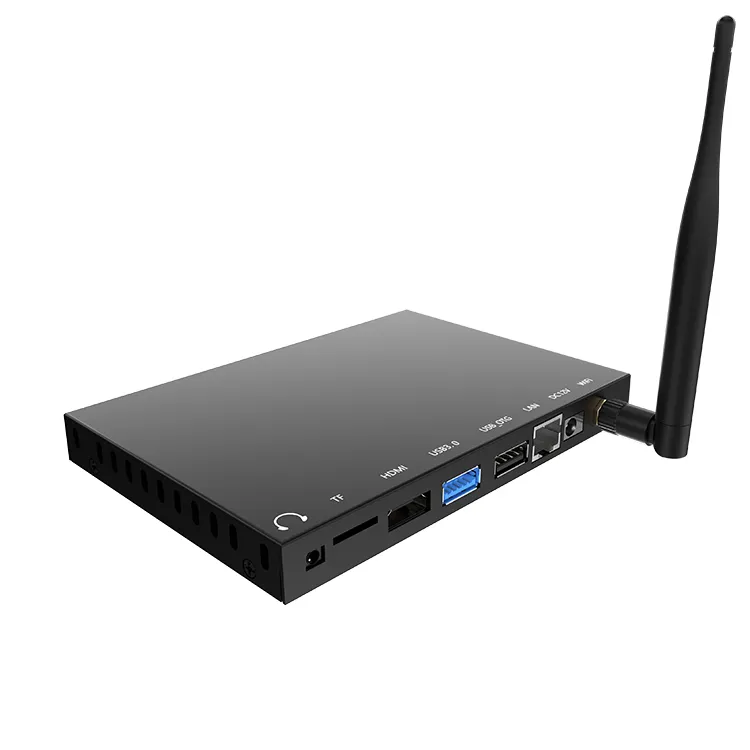
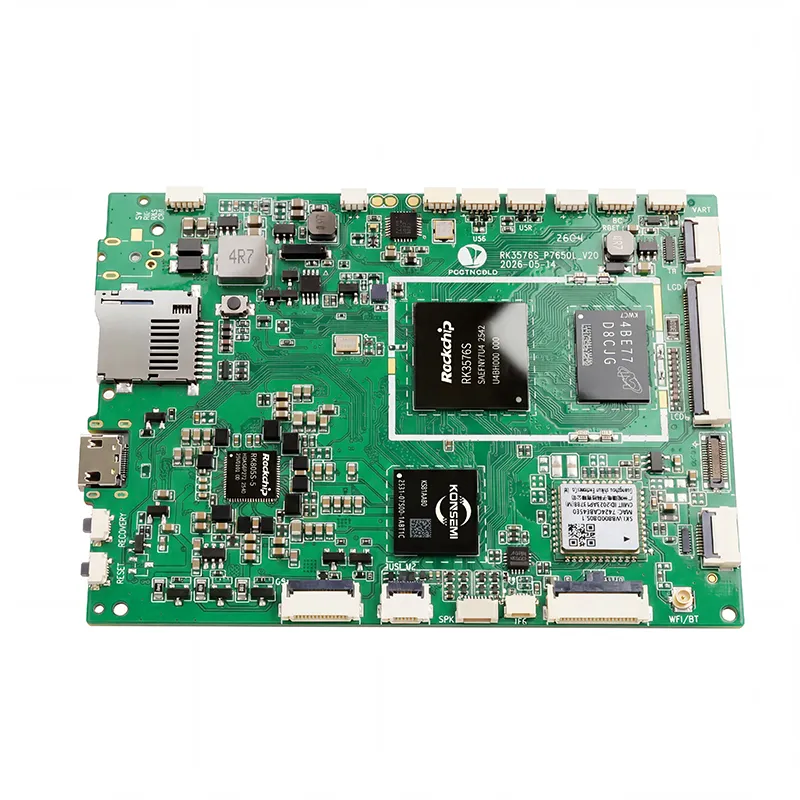
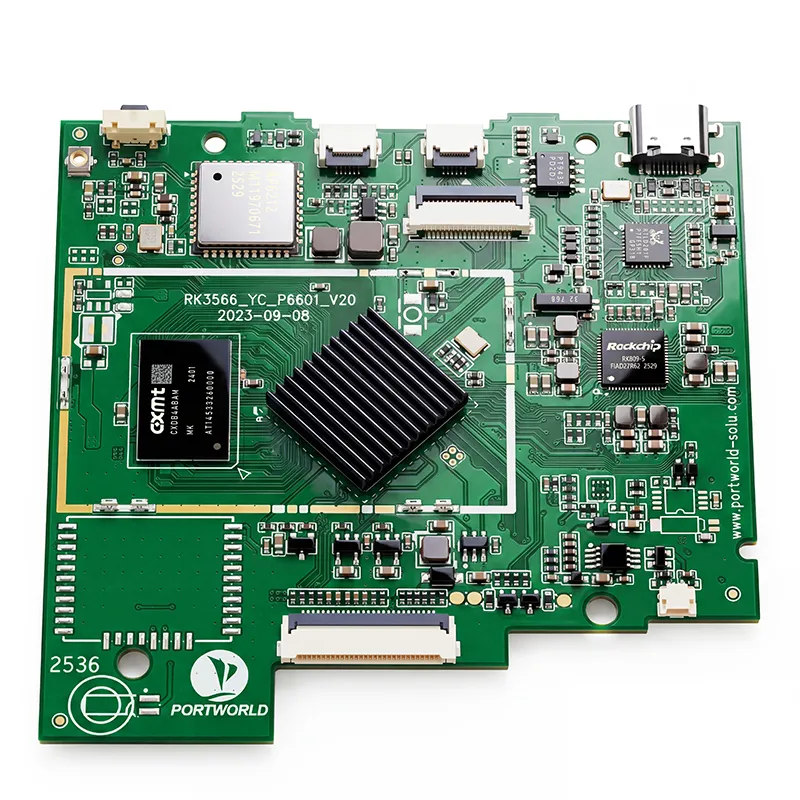
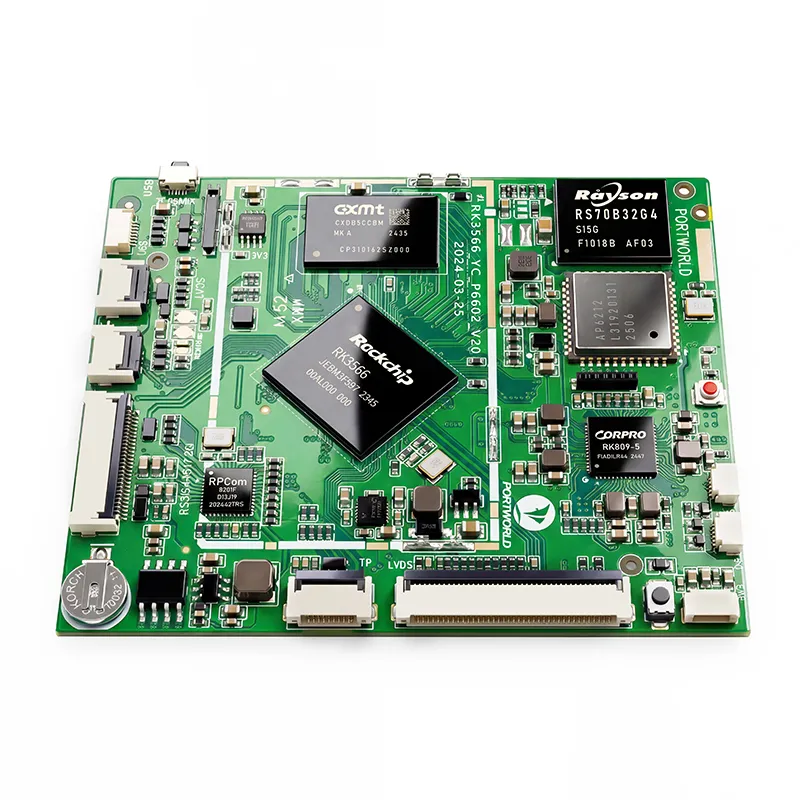
Developers seeking an RK3568-based platform can leverage Portworld's mainboard solutions, which include the YC-P6802 and YC-P6801 models.
The YC-P6802 represents an RK3568-based mainboard solution equipped with a quad-core Cortex-A55 processor operating at frequencies up to 2.0 GHz, Mali-G52 graphics capabilities, an integrated NPU with a performance rating of up to 1 TOPS, and dual Gigabit Ethernet connectivity. The combination of computational power and connectivity features positions this solution as suitable for industrial gateways, embedded control systems, and networked equipment applications. Interface specifications should be verified against the particular board revision and individual project specifications.
The YC-P6801 constitutes an alternative RK3568-based solution designed for specialized embedded hardware implementations, offering PCBA and CKD/SKD manufacturing options tailored to project specifications. This option is appropriate when applications require customized hardware architecture or manufacturing processes that align with the customer's assembly and integration workflow.
In addition to processor selection, Portworld provides comprehensive support encompassing OEM/ODM development, PCB and PCBA customization, operating system adaptation, interface integration, and production-oriented hardware development. These capabilities enable customers to ensure their mainboard aligns with their display, enclosure, communication, and application specifications.
For initiatives with established specifications, the optimal approach involves communicating the intended application, necessary interfaces, display requirements, operating system preferences, anticipated production volume, and operational environment. This information facilitates assessment of whether a standard RK3568 configuration suffices or if a tailored solution is warranted.
Making the Appropriate RK3568 Mainboard Selection
Choosing an RK3568 mainboard for an industrial embedded system represents a comprehensive system-level determination, rather than merely comparing processors. Processing capability, industrial connectivity options, display interoperability, memory and storage specifications, software ecosystem support, thermal management, and sustained supply availability all influence the appropriateness of the selected platform.
The RK3568 merits consideration when an application demands balanced embedded computing capabilities, multimedia functionality, robust connectivity features, and compatibility with designated edge AI applications. The optimal selection is the board that fulfills project requirements with adequate performance headroom, reduces integration complexity, and demonstrates reliable manufacturability and maintainability throughout its operational lifecycle.