RK3576 Motherboard PCBA Design and Custom OEM/ODM Services
Apr 27,2026
The Next-Gen RK3588 Core board
Powerful, AI-Driven, High-Performance.Shop Now>




The effectiveness of an Internet of Things product is substantially determined by the selection of an appropriate embedded platform. Distinct IoT applications necessitate distinct specifications, encompassing computational performance, wireless communication capabilities, display functionality, energy efficiency, and hardware adaptability.
The ESP32 family has established itself as a predominant selection for IoT development initiatives, attributed to its advantageous combination of performance, connectivity features, and economic viability.
Nevertheless, given the availability of numerous variants—encompassing ESP32, ESP32-S3, ESP32-C3, and ESP32-P4—identifying the optimal platform for a particular application presents considerable difficulty.
This comprehensive guide delineates the methodology for determining the most appropriate ESP32 platform in accordance with specific application requirements.
Essential Considerations in ESP32 Platform Selection
Prior to selecting an ESP32 chip or module, development professionals must evaluate multiple critical considerations:
1. Processing Performance
Distinct IoT products necessitate varying computational capacity levels.
Elementary devices including sensors and control systems may necessitate only fundamental processing capabilities, whereas sophisticated products such as intelligent displays and artificial intelligence systems demand enhanced performance.
Evaluate the following:
Central processing unit performance
Memory capacity requirements
Artificial intelligence processing functionality
Immediate responsiveness requirements
2. Wireless Connectivity Requirements
Communication infrastructure constitutes a fundamental component of IoT products.
ESP32 platforms provide access to multiple wireless communication alternatives, including:
Wi-Fi technology
Bluetooth / Bluetooth Low Energy
The appropriate selection depends upon the communication mechanisms between:
Mobile applications
Cloud-based systems
Additional IoT devices
Intra-network communications
3. Display and User Interface Requirements
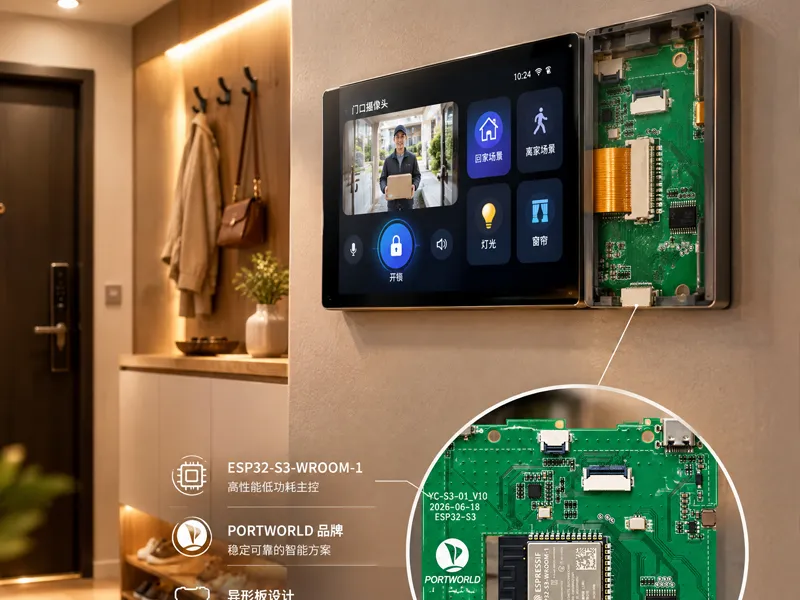
Contemporary Internet of Things products increasingly demand interactive user interfaces.
Should your product incorporate:
Touchscreen displays
Graphical user interfaces
Operational control panels
Visible status indicators
a computing platform featuring enhanced graphical processing capabilities is advisable.
4. Energy Consumption Considerations
Battery-dependent Internet of Things devices necessitate sophisticated power management optimization.
Devices in the following categories:
Portable wearable technology
Wireless sensing equipment
Intelligent tracking systems
demand:
Minimal power consumption modes
Optimized computational efficiency
Extended operational battery duration
ESP32: Cost-Effective IoT Controller
The standard ESP32 continues to serve as a preferred solution for diverse IoT applications.
Features:
Wi-Fi connectivity
Bluetooth support
Rich GPIO interfaces
Low cost
Large developer ecosystem
Suitable Applications:
Smart switches
IoT sensors
Smart plugs
Home automation devices
Basic controllers
ESP32 proves optimal when connectivity and cost efficiency represent the primary considerations.
ESP32-C3: Low-Power IoT Applications
The ESP32-C3 has been engineered for cost-conscious and energy-efficient IoT solutions.
Features:
RISC-V architecture
Low power consumption
Wi-Fi & Bluetooth LE
Compact design
Applications:
Smart sensors
Smart meters
Environmental monitoring
Battery-powered devices
ESP32-C3 motherboards represents an excellent option for straightforward, connected IoT products demanding extended operational duration.
The ESP32-S3 represents one of the most adaptable microcontroller platforms within the ESP32 product line.
It delivers the following capabilities:
Enhanced computational performance
Artificial intelligence acceleration functionality
Superior multimedia capabilities
State-of-the-art peripheral connectivity options
Primary use cases:
Autonomous robotic systems
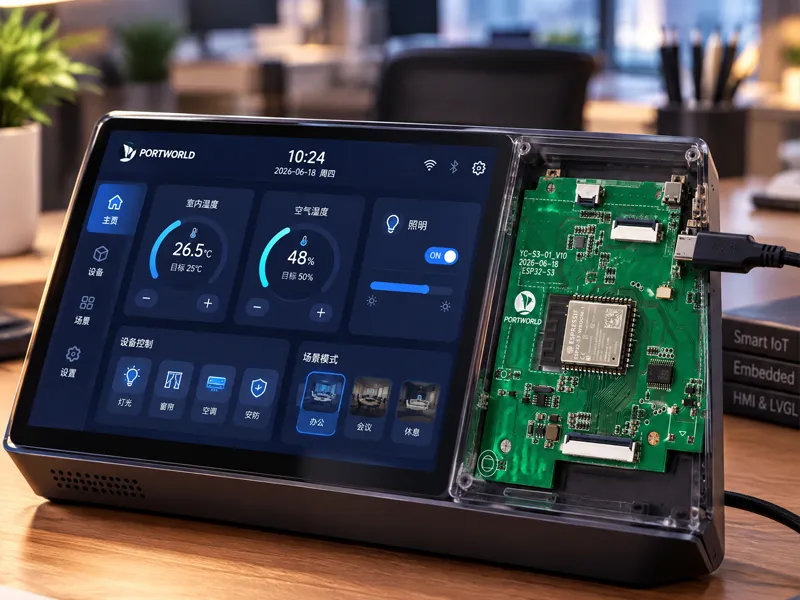
Intelligent residential control interfaces with touch functionality
Voice-enabled interactive systems
Connected intelligent playthings
Machine learning-powered imaging devices
Pedagogical robotic platforms
The ESP32-S3 motherboards serves as an optimal solution for sophisticated Internet of Things applications that demand interactive functionality, operational command capabilities, and distributed artificial intelligence processing at the edge.
ESP32-P4: Advanced Embedded System Solutions
The ESP32-P4 is engineered for sophisticated embedded applications that demand enhanced computational performance and comprehensive multimedia functionality.
Primary Use Cases:
Intelligent display systems
Industrial human-machine interfaces
Sophisticated control systems
Multimedia-enabled IoT devices
The ESP32-P4 demonstrates particular suitability for applications necessitating:
Comprehensive graphical user interfaces
Expanded display dimensions
Demanding computational requirements
Enhanced interactive capabilities
Choosing ESP32 Based on Application
| Application | Recommended Platform |
|---|---|
| Smart Sensors | ESP32-C3 / ESP32 |
| Smart Home Devices | ESP32 / ESP32-S3 |
| Touchscreen Control Panel | ESP32-S3 / ESP32-P4 |
| Educational Robots | ESP32-S3 |
| Smart Toy Robots | ESP32-S3 |
| Voice Assistant Devices | ESP32-S3 |
| Industrial HMI | ESP32-P4 / ESP32-S3 |
| Battery IoT Devices | ESP32-C3 |
| AIoT Applications | ESP32-S3 |
ESP32 Platform Selection Illustrations
Illustration 1: Intelligent Temperature Monitoring System
Specifications:
Minimal energy consumption
Wireless communication capability
Basic information gathering
Suggested Platform:
ESP32-C3
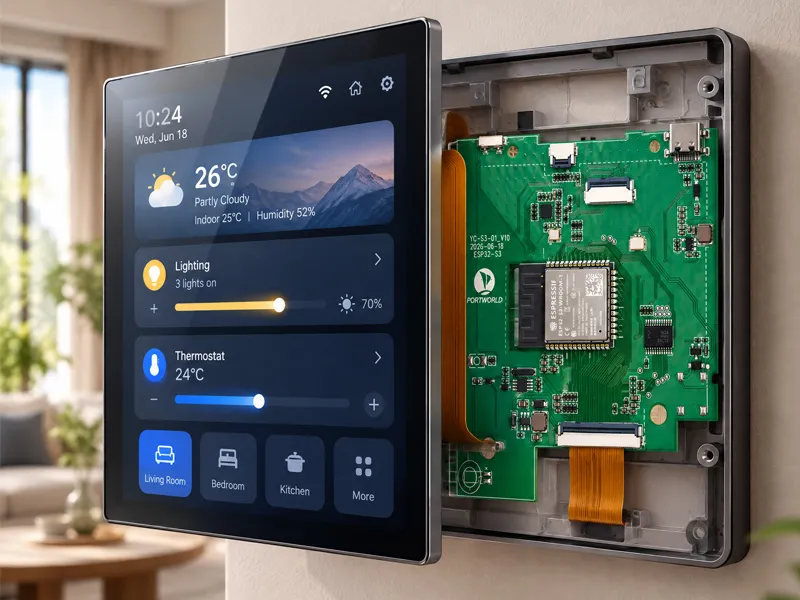
Illustration 2: Intelligent Residential Automation Interface
Specifications:
Touch-sensitive display
Interactive user experience
Management of numerous connected devices
Suggested Platform:
ESP32-S3 / ESP32-P4
Illustration 3: Pedagogical Robotic Device
Specifications:
Motor operation and regulation
Multiple sensor incorporation
Bluetooth wireless protocol
Suggested Platform:
ESP32-S3
Illustration 4: Commercial Operations Management System
Specifications:
Visual output mechanism
Graphical information representation
Consistent performance standards
Suggested Platform:
ESP32-P4
Portworld ESP32 Embedded Solutions
Choosing an appropriate ESP32 platform represents merely the initial phase in creating a robust Internet of Things product.
Portworld delivers comprehensive ESP32-based embedded solutions, encompassing:
Hardware Customization
ESP32 / ESP32-S3 embedded boards
Customized PCB design
Display integration
Sensor and peripheral expansion
Software Integration
Firmware development
ESP-IDF support
Internet of Things communication integration
User interface development
Product Development
Prototype design
Engineering validation
Original Equipment Manufacturer/Original Design Manufacturer manufacturing
Serving applications ranging from intelligent home automation systems and robotic platforms to industrial Internet of Things infrastructure, Portworld assists organizations in constructing dependable and extensible Internet of Things products.