RK3576 Motherboard PCBA Design and Custom OEM/ODM Services
Apr 27,2026
The Next-Gen RK3588 Core board
Powerful, AI-Driven, High-Performance.Shop Now>




The smart home sector is experiencing rapid transformation as an increasing number of residential properties integrate connected devices that enhance operational convenience, optimize energy consumption, and strengthen security measures. Encompassing smart illumination systems, automated temperature regulation, intelligent control panels, and Internet of Things sensors, contemporary residences are progressively becoming more interconnected.
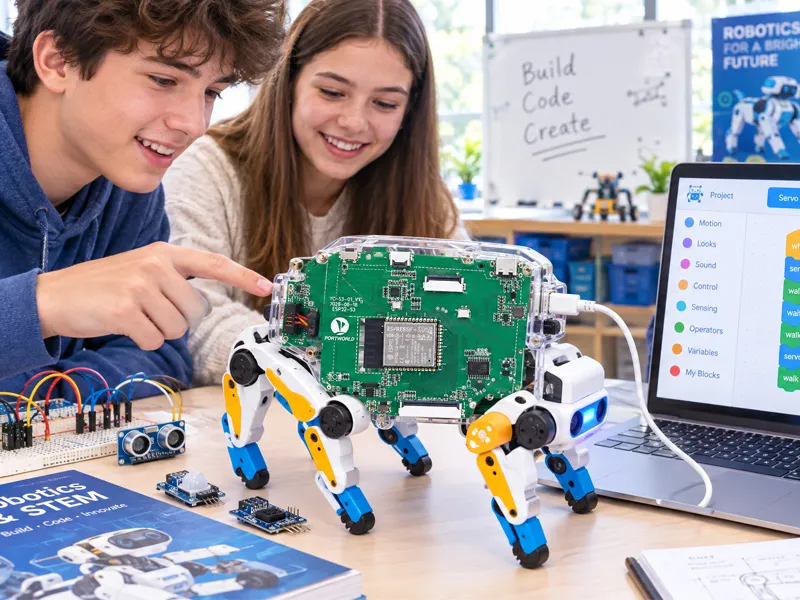
At the foundation of numerous smart home devices lies a diminutive yet sophisticated embedded processing unit — the ESP32.
Equipped with integrated wireless communication capabilities, minimal power requirements, and adaptable hardware connectivity options, the ESP32 delivers an effective platform for creating smart home automation solutions.
What Attributes Render ESP32 Appropriate for Smart Home Implementations?
The ESP32 constitutes a reduced-power microcontroller framework engineered for networked IoT deployments. It consolidates critical functionalities essential for smart home devices, encompassing:
Wireless network connectivity
Bluetooth and BLE protocols
Multiple general-purpose input-output ports
Management of sensors and control mechanisms
Minimal energy utilization
Comprehensive software development framework support
These characteristics enable manufacturers and development teams to manufacture compact, dependable, and economically viable smart home solutions.
1. Intelligent Lighting Control Systems
Among the most prevalent implementations of ESP32 technology in residential automation environments is the development of sophisticated lighting control mechanisms.
Conventional lighting fixtures can be transformed into intelligent lighting solutions through the integration of ESP32 with the following components:
LED control modules
Motion detection sensors
Ambient light sensors
Mobile application interfaces
Voice-activated assistant systems
Utilizing ESP32 technology, homeowners are capable of:
Managing lights remotely via on/off commands
Modulating brightness levels
Establishing automated lighting schedules
Operating lighting systems through mobile devices or integrated smart home ecosystems
As an illustration, an ESP32-based intelligent lighting management system can dynamically modify interior illumination in response to temporal factors, occupancy detection, or environmental parameters.
2. Centralized Smart Home Interface Systems and Touchscreen Control Panels
As residential automation technology advances, occupants require unified control mechanisms for system management.
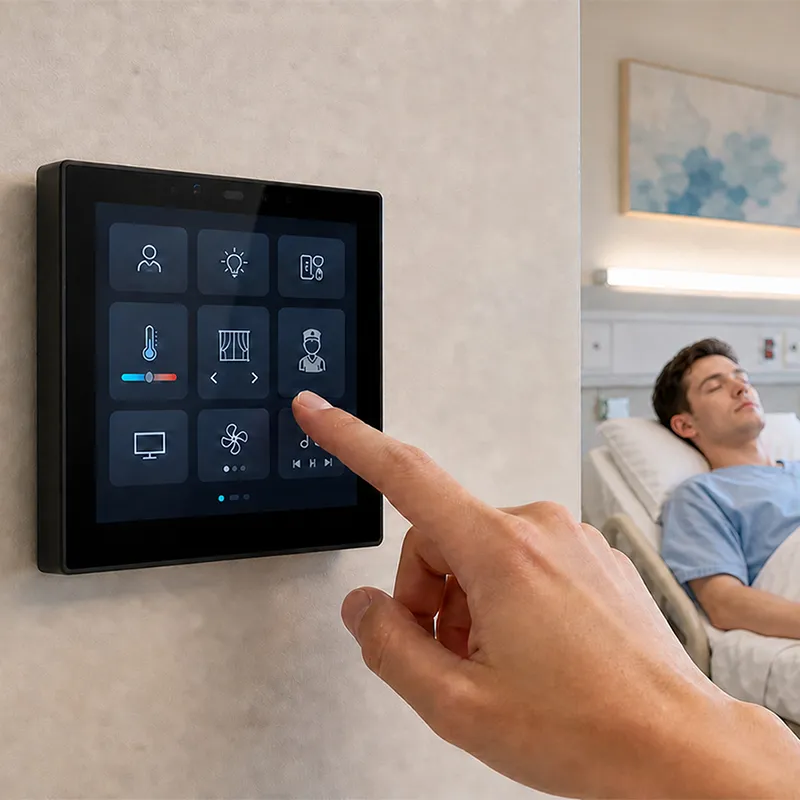
ESP32-S3-based systems are being deployed extensively in:
Residential automation command centers
Touchscreen interactive terminals
Individual room management interfaces
When combined with display frameworks such as LVGL, ESP32-S3 technology delivers:
Interactive touchscreen user interfaces
Instantaneous system status visualization
Automated scene configuration and control
Environmental sensor data monitoring
A comprehensive smart home control panel can consolidate numerous subsystems, encompassing:
Illumination systems
Climate control apparatus
Window covering mechanisms
Security and access control systems
Power consumption monitoring and optimization
3. Intelligent Sensors and Environmental Monitoring
Smart homes depend on continuous environmental data collection.
The ESP32 microcontroller can integrate with multiple sensors to assess:
Temperature
Humidity
Air quality
Light intensity
Motion detection
Practical implementations encompass:
Intelligent Thermostatic Systems
The ESP32 gathers temperature information and regulates heating or cooling mechanisms with minimal human intervention.
Indoor Air Quality Assessment
Sensory devices identify interior atmospheric conditions and transmit notifications via smartphone platforms.
Automated Window and Curtain Systems
Environmental measurements can initiate programmed opening or closing sequences.
4. Intelligent Home Security Solutions
Residential security represents a significant application domain for ESP32 technology.
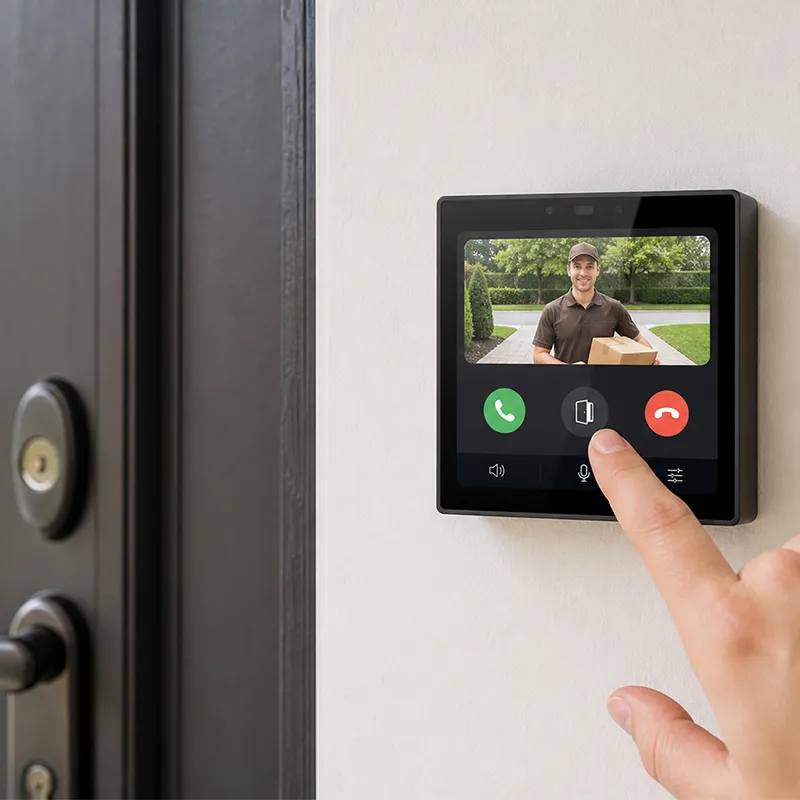
ESP32-enabled security solutions may incorporate:
Electronic door locking mechanisms
Motion-activated detection systems
Intelligent video doorbells
Automated alarm systems
Biometric and credential-based access management
Utilizing Wi-Fi and Bluetooth communication protocols, these systems deliver:
Distant system oversight
Wireless device management
Instantaneous status updates
Compatibility with integrated smart home ecosystems
5. Smart Appliances and IoT Controllers
Numerous household appliances are transitioning to connected systems via IoT technology.
ESP32 integration is feasible for:
Intelligent power outlets
Automated coffee brewing systems
Electronic washing machines
Modern kitchen equipment
Power consumption tracking devices
Through the incorporation of ESP32 control modules, conventional appliances can acquire:
Distant operation capabilities
Programmed task execution
Power consumption analysis
Internet-based system integration
6. Smart Home Energy Management
Energy conservation has emerged as a critical priority in contemporary residential settings.
ESP32 facilitates energy management solutions through the collection and analysis of information from:
Intelligent utility meters
Electrical measurement instruments
Photovoltaic installations
Storage system controllers
Residents are able to assess:
Electrical power utilization
Appliance performance metrics
Potential efficiency improvements
This approach contributes to the development of more intelligent and environmentally responsible residential environments.
7. Voice-Controlled Smart Home Devices
Voice-based interaction represents an increasingly significant capability in contemporary smart homes.
ESP32-S3 delivers superior computational resources for implementations including:
Voice command interfaces
Intelligent voice assistants
Interactive residential automation systems
Relevant use cases encompass:
Audio-activated illumination management
Voice-enabled audio systems
Voice instruction reception panels
Voice-responsive home automation controllers
8. Intelligent Residential IoT Communication Hub
A contemporary smart residence typically encompasses numerous interconnected devices.
The ESP32 microcontroller serves as a central communication and control intermediary among:
Sensory equipment
Domestic appliances
Mobile software applications
Cloud-based services
Primary operational capabilities encompass:
Information aggregation
Wireless data transmission
Connected device administration
Automated system regulation
ESP32 Smart Home Application Examples
| Application | ESP32 Function |
|---|---|
| Smart Lighting | Wireless control and LED management |
| Smart Panel | Touchscreen HMI and device control |
| Smart Lock | Access control and communication |
| Smart Sensor | Data collection and monitoring |
| Smart Plug | Appliance automation |
| Smart Thermostat | Temperature control |
| Smart Curtain | Motor control |
| Energy Monitor | Power data collection |
ESP32 vs Traditional Smart Home Controllers
Compared with traditional embedded controllers, ESP32 offers:
| Feature | Traditional Controller | ESP32 |
|---|---|---|
| Wi-Fi | Usually requires external module | Built-in |
| Bluetooth | Additional hardware needed | Integrated |
| IoT Development | More complex | Designed for connected devices |
| Power Management | Depends on design | Multiple low-power modes |
| Cost | Higher system cost | Cost-effective solution |
Portworld ESP32 Smart Home Solutions
The development of a commercial smart home product extends beyond the selection of a microcontroller alone. Manufacturers require dependable hardware architecture, seamless software integration, and comprehensive manufacturing assistance.
Portworld delivers tailored ESP32 embedded solutions designed for smart home applications, encompassing:
ESP32 / ESP32-S3 control boards
Touchscreen smart home panels
IoT controller development
Sensor integration
Embedded software support
OEM/ODM customization
From intelligent switches and control panels to advanced IoT terminals, Portworld collaborates with international partners to facilitate the creation of market-ready smart home devices.