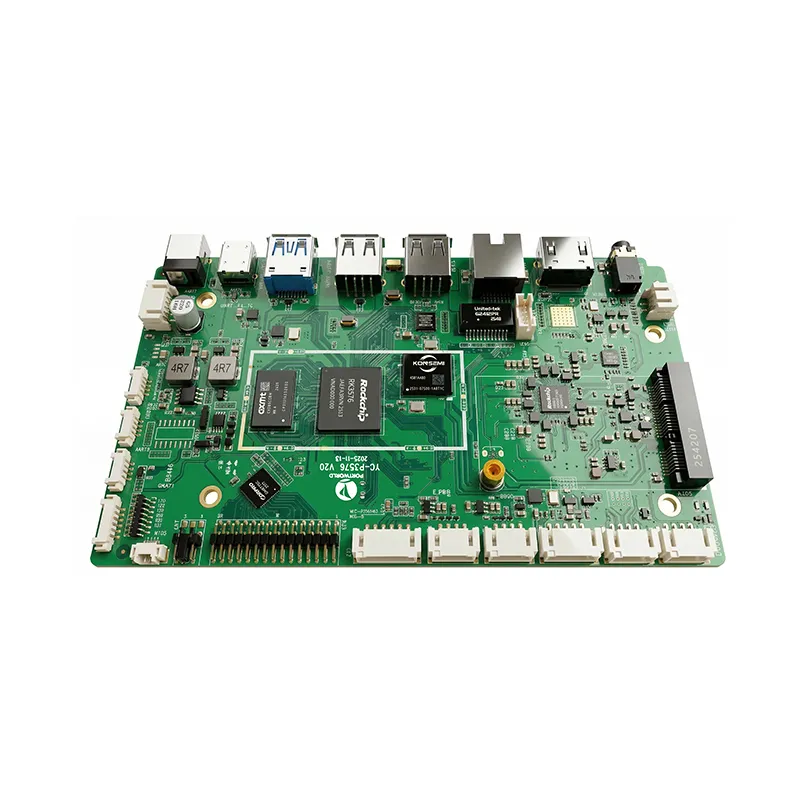
RK3576 Motherboard PCBA Design and Custom OEM/ODM Services
Apr 27,2026
The Next-Gen RK3588 Core board
Powerful, AI-Driven, High-Performance.Shop Now>


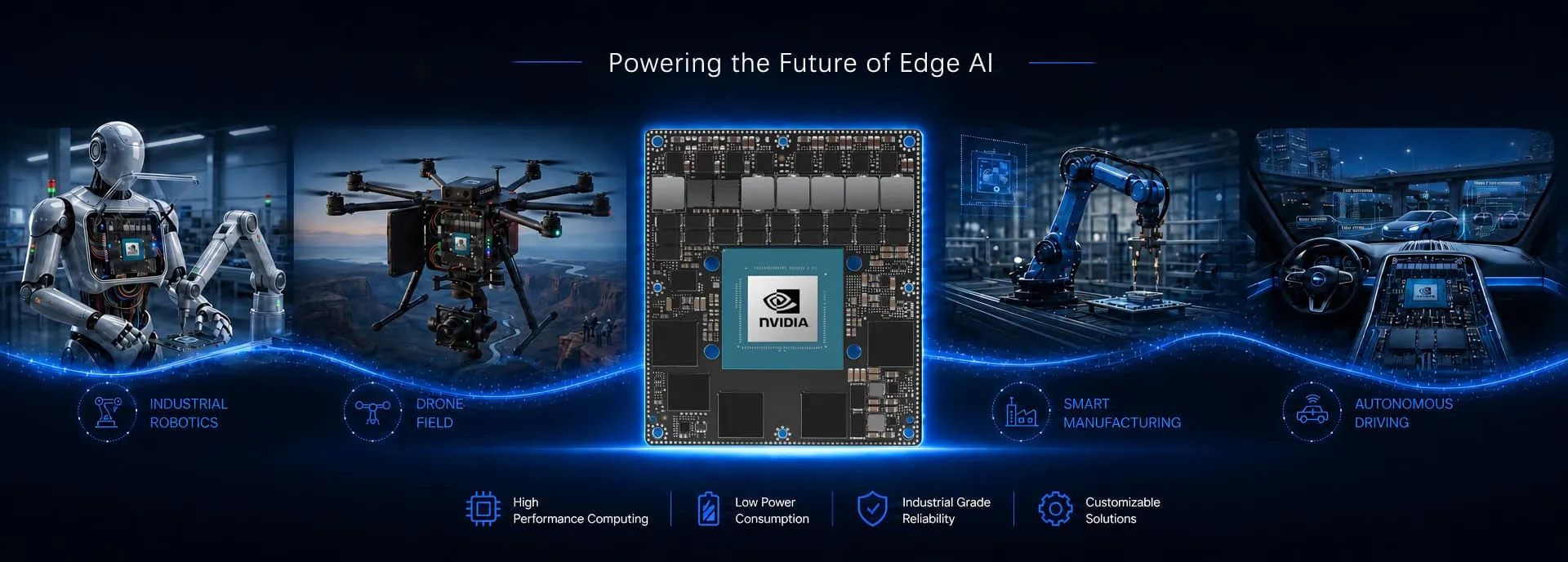


With the swift advancement of edge AI, robotics, smart displays, industrial automation, and intelligent devices, embedded processors have emerged as a crucial element in determining product performance.
Among Rockchip's newest AI System on Chips (SoCs), the RK3588 and RK3576 are garnering considerable interest. Both platforms offer robust computing capabilities and integrated AI acceleration, yet they cater to distinct application needs.
A frequent inquiry from developers and system integrators is:
Should I opt for the RK3588 to achieve maximum performance, or the RK3576 for a more balanced and cost-effective alternative?
The response is contingent upon the specific workload.
Although both processors facilitate AI acceleration, the RK3588 is more oriented towards high-performance edge computing, multimedia processing, and intricate AI applications, whereas the RK3576 presents an efficient option for cost-sensitive AIoT and embedded products.
RK3588 vs RK3576: Differences in Core AI Computing
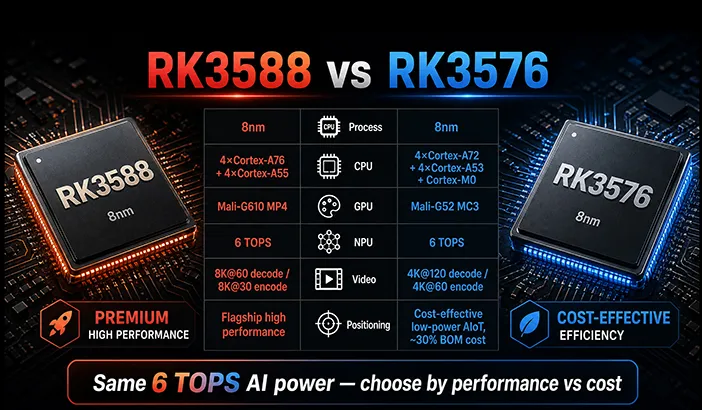
At first glance, the RK3588 and RK3576 may seem alike as both feature an NPU capable of delivering up to 6 TOPS in AI computing performance. However, the evaluation of AI performance extends beyond just NPU TOPS. Factors such as CPU capabilities, GPU performance, memory bandwidth, and the overall system architecture significantly influence real-world AI workloads.
CPU Performance
The primary distinction between the RK3588 and RK3576 lies in their CPU architecture.
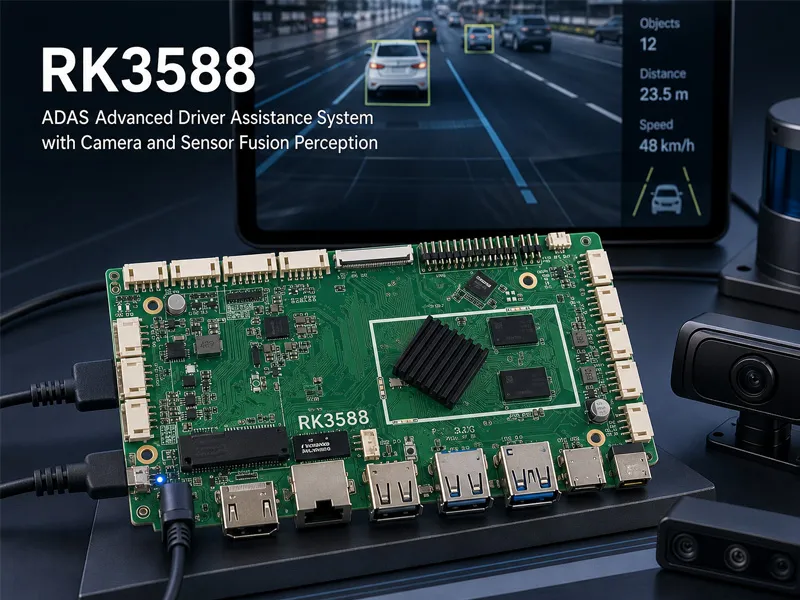
RK3588:
4 × Cortex-A76 high-performance cores
4 × Cortex-A55 efficiency cores
RK3576:
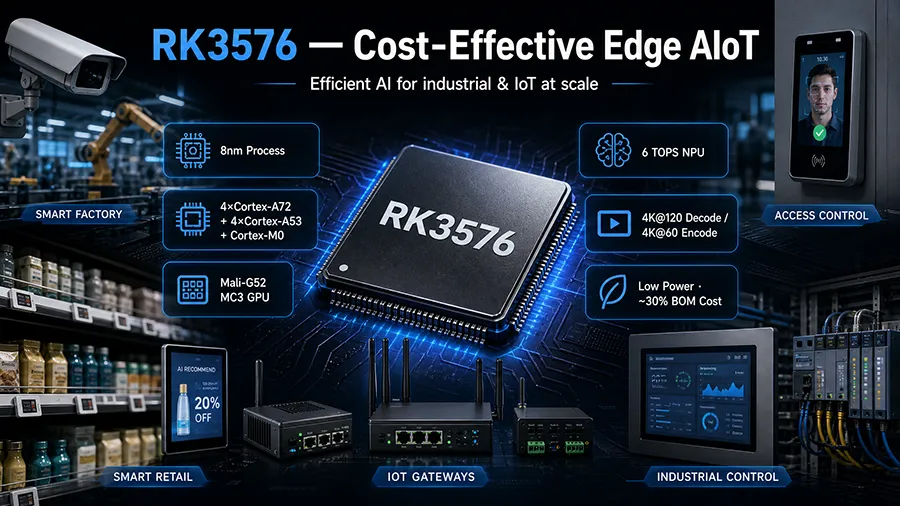
4 × Cortex-A72 performance cores
4 × Cortex-A53 efficiency cores
The RK3588 employs a more advanced CPU architecture, which enhances processing performance for applications that involve:
Multi-task computing
Complex Linux applications
AI data processing
Industrial software platforms
Conversely, the RK3576 emphasizes a balance between performance and power efficiency, making it ideal for embedded systems that require lower power consumption.
AI Performance: Identical NPU Specifications, Varied Real-World Outcomes
Both the RK3588 and RK3576 are equipped with a 6 TOPS NPU, which facilitates AI inference tasks including:
Object detection
Image recognition
Face recognition
AI vision applications
Nevertheless, the actual AI performance is influenced by factors beyond just the NPU specifications.
In scenarios that require:
Multiple camera streams
High-resolution image processing
Larger AI models
Concurrent execution of multiple AI tasks
The RK3588 demonstrates superior capabilities owing to its enhanced CPU performance, GPU strength, and increased system bandwidth.
Conversely, for less demanding AI applications such as:
Single-camera recognition
Smart sensors
Basic AI terminals
The RK3576 is capable of delivering adequate performance while maintaining lower system costs and reduced power consumption.
Comparison of GPU and Multimedia Performance
The graphics performance represents a significant distinction between the two platforms.
The RK3588 features:
ARM Mali-G610 MP4 GPU
In contrast, the RK3576 is equipped with:
ARM Mali-G52 MC3 GPU
The superior GPU performance of the RK3588 renders it more suitable for:
High-resolution displays
Advanced HMI systems
Multi-screen applications
Multimedia processing
AI visualization interfaces
For instance, applications such as smart conference terminals, AI robots with displays, and industrial control panels gain advantages from the enhanced graphics capabilities of the RK3588.
RK3588 Applications: High-Performance AI Edge Computing
The RK3588 is engineered for sophisticated intelligent applications that demand enhanced computing power.
AI Robotics
Robots necessitate real-time perception, decision-making, and interaction capabilities.
The RK3588 can facilitate:
Robot vision systems
Autonomous navigation
AI inference
Multi-sensor processing
Intelligent control platforms
Common applications encompass:
Humanoid robots
Service robots
Inspection robots
Autonomous mobile robots
Industrial AI Systems
Within smart manufacturing settings, the RK3588 can deliver the computational strength required for:
Machine vision inspection
Industrial AI gateways
Smart factory terminals
Intelligent equipment
Its superior processing capabilities enable the simultaneous execution of multiple AI tasks and industrial applications.
RK3588 Applications: High-Performance AI Edge Computing
The RK3588 is engineered for sophisticated intelligent applications that demand enhanced computing power.
AI Robotics
Robots necessitate real-time perception, decision-making, and interaction capabilities.
The RK3588 can facilitate:
Robot vision systems
Autonomous navigation
AI inference
Multi-sensor processing
Intelligent control platforms
Common applications encompass:
Humanoid robots
Service robots
Inspection robots
Autonomous mobile robots
Industrial AI Systems
Within smart manufacturing settings, the RK3588 can deliver the computational strength required for:
Machine vision inspection
Industrial AI gateways
Smart factory terminals
Intelligent equipment
Its superior processing capabilities enable the simultaneous execution of multiple AI tasks and industrial applications.
RK3588 or RK3576: How to Choose?
The right processor depends on your application requirements.
| Application Requirement | Recommended Platform |
|---|---|
| Multi-camera AI vision | RK3588 |
| Humanoid robots / advanced robotics | RK3588 |
| High-performance HMI | RK3588 |
| AI industrial inspection | RK3588 |
| Smart display systems | RK3588 |
| Cost-sensitive AIoT devices | RK3576 |
| Low-power embedded products | RK3576 |
| Basic AI recognition | RK3576 |
RK3588 for Performance, RK3576 for Efficiency
Both RK3588 and RK3576 are robust AI-enabled embedded processors, yet they cater to distinct market requirements.
The RK3588 is the superior option for sophisticated AI applications that demand peak computing performance, enhanced graphics capabilities, and the ability to handle intricate workloads.
Conversely, the RK3576 offers a budget-friendly alternative for AIoT devices that necessitate efficient processing and reduced power consumption.
Selecting the appropriate platform involves more than just a comparison of specifications; it requires aligning computing capabilities with the actual needs of your application.