

RK3576 Motherboard PCBA Design and Custom OEM/ODM Services
Apr 27,2026
The Next-Gen RK3588 Core board
Powerful, AI-Driven, High-Performance.Shop Now>


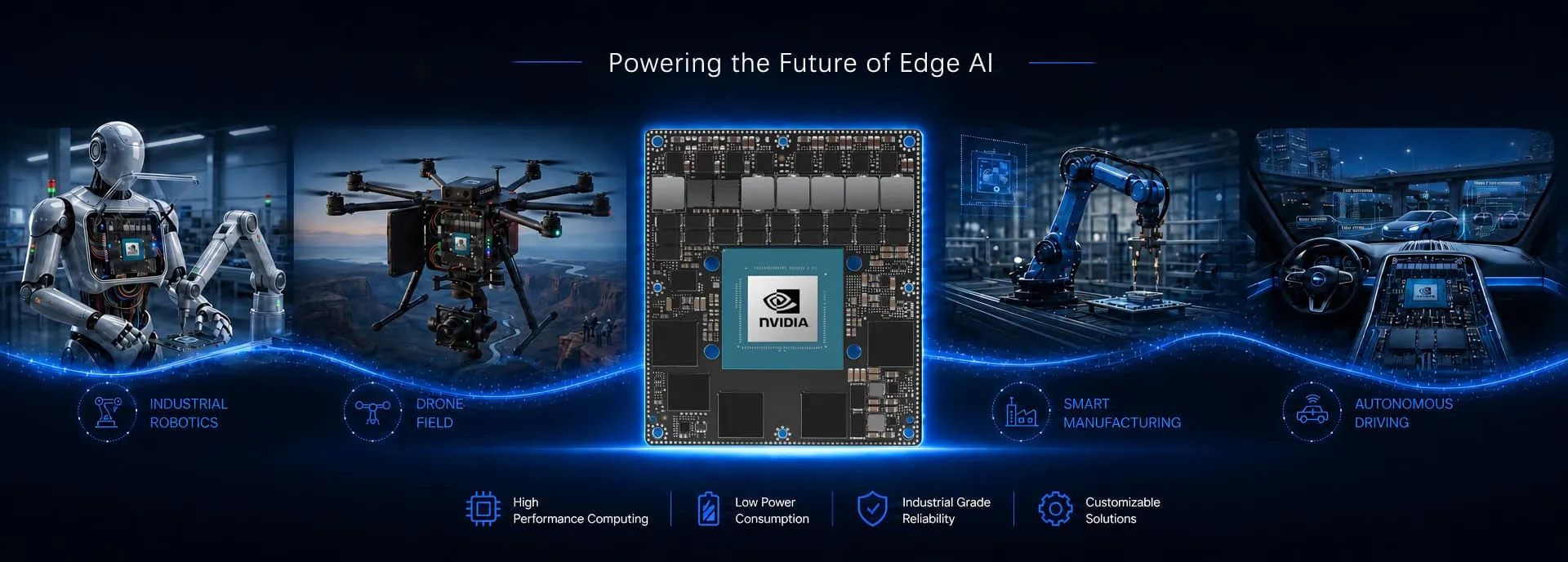


As artificial intelligence transitions from cloud computing to edge devices, smart motherboards have emerged as essential components for constructing intelligent systems. AI applications, ranging from industrial robots and machine vision equipment to smart displays and IoT devices, necessitate more than conventional embedded boards. They demand robust computing performance, AI acceleration capabilities, adaptable interfaces, and dependable long-term operation.
When selecting the appropriate smart motherboard for AI applications, it is crucial to consider processor performance, NPU capabilities, operating system compatibility, expansion options, and customization flexibility. A well-engineered AI motherboard can greatly enhance system efficiency and expedite product development.
1. Evaluate AI Processing Performance
The primary consideration when choosing an AI smart motherboard is its computing capability. AI applications, including object detection, image recognition, voice processing, and robotics, require rapid data processing and real-time inference.
An appropriate AI motherboard should feature:
A high-performance CPU for system control and multitasking
A powerful GPU for graphics processing and AI acceleration
A dedicated NPU for neural network inference
Adequate memory and storage capacity
For instance, the Rockchip RK3588 platform incorporates an octa-core CPU, Mali-G610 GPU, and up to 6 TOPS NPU, rendering it suitable for edge AI applications such as robotics, industrial vision, and intelligent terminals.
2. Select the Appropriate AI Accelerator
AI acceleration is a critical attribute of a smart motherboard. Conventional CPUs alone may not deliver sufficient performance for real-time AI workloads.
Contemporary AI motherboards generally utilize:
NPU (Neural Processing Unit)
GPU acceleration
AI inference engines
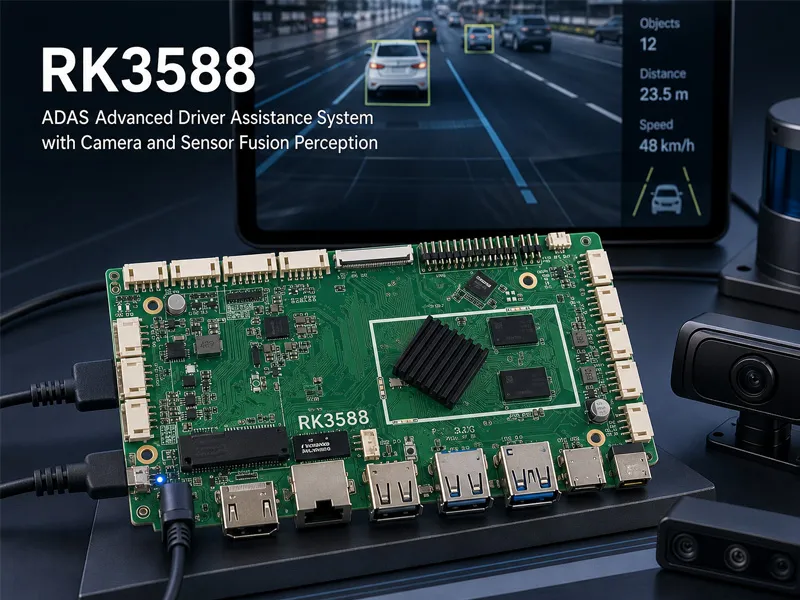
The NPU enables AI models to operate efficiently with reduced power consumption compared to CPU-only processing.
When choosing a motherboard, verify its support for popular AI frameworks such as:
TensorFlow / TensorFlow Lite
PyTorch
ONNX
OpenCV AI solutions
3. Assess Operating System Compatibility
The compatibility of software has a direct impact on the efficiency of development. Various AI applications may necessitate different operating systems.
An adaptable AI motherboard ought to accommodate multiple platforms, such as:
Android for smart terminals and commercial devices
Linux Ubuntu for AI development and edge computing
Debian for reliable industrial deployment
Buildroot for lightweight embedded systems
Support for Linux is particularly crucial for AI applications, as it grants access to a broad array of development tools, libraries, and open-source resources.
4. Evaluate Interface and Expansion Options
AI systems typically require an array of sensors, cameras, displays, and communication modules. Consequently, the availability of interfaces is essential.
An appropriate AI motherboard should provide support for:
MIPI-CSI camera interfaces
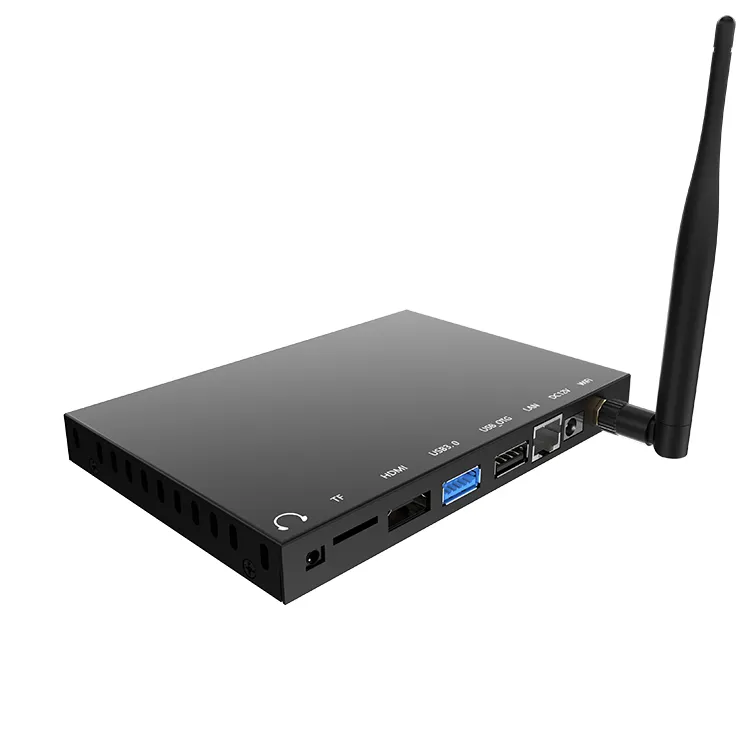
HDMI display output
USB expansion
Ethernet connectivity
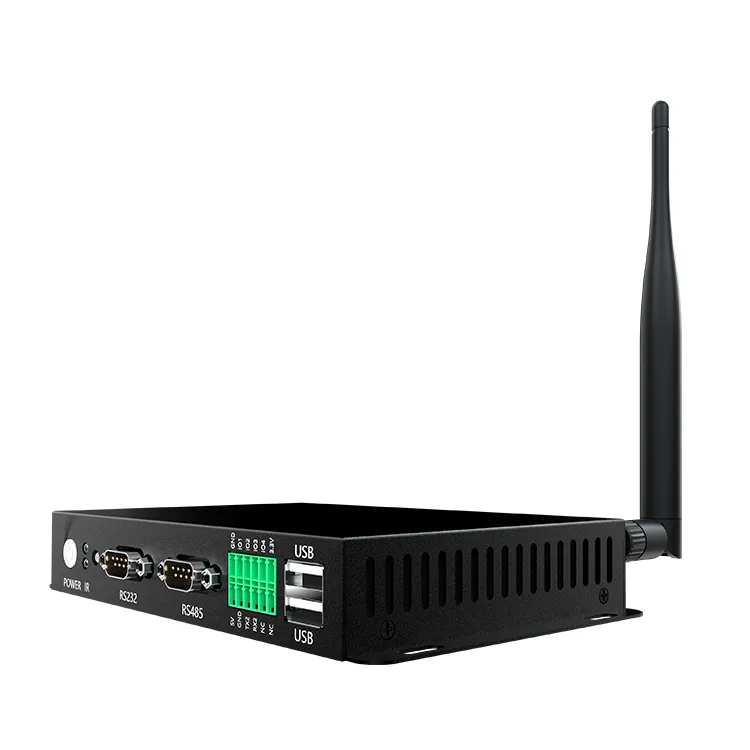
UART / RS232 / RS485
CAN bus
GPIO / I2C / SPI interfaces
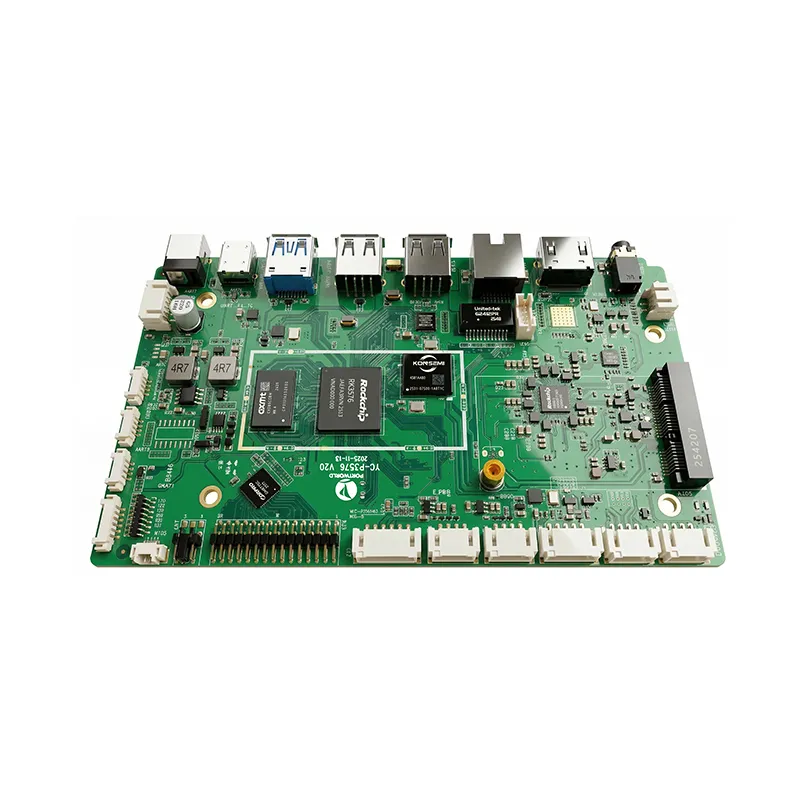
In the context of robotics and industrial automation, a diverse range of interfaces enables developers to connect cameras, motors, sensors, and control systems with greater ease.
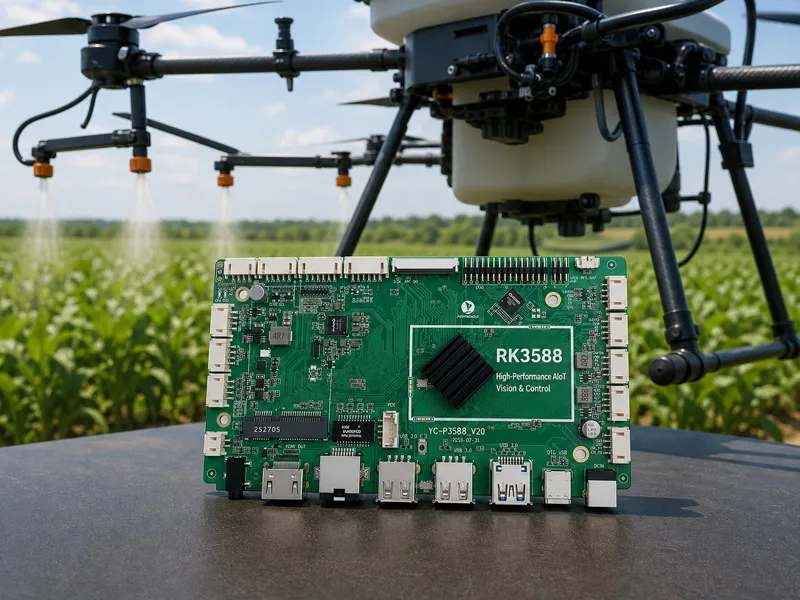
5. Take Power Consumption and Thermal Design into Account
AI processing demands considerable computing power; however, numerous embedded applications face stringent power and space constraints.
When selecting an AI motherboard, it is important to consider:
Processor power efficiency
Heat dissipation design
Capability for fanless operation
Long-term stability under continuous workloads
For industrial applications, the motherboard must support 24/7 operation while ensuring stable performance in demanding environments.
6. Select a Scalable OEM/ODM Solution
Numerous AI initiatives necessitate tailored hardware rather than conventional development boards. An experienced OEM/ODM partner can assist in optimizing the motherboard to meet specific application needs.
Portworld offers bespoke smart motherboard solutions tailored for AI and embedded applications.
As a comprehensive provider of touch screen solutions focused on custom B2B smart hardware, Portworld boasts 18 years of industry expertise and delivers full OEM/ODM services, encompassing everything from hardware design to mass production.
Portworld accommodates various processor platforms, including:
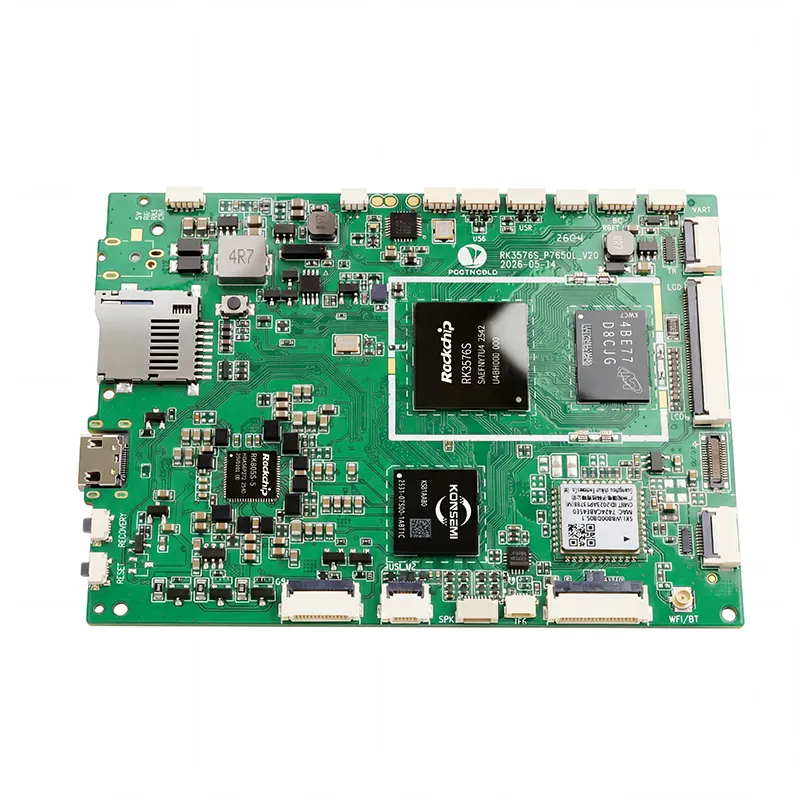
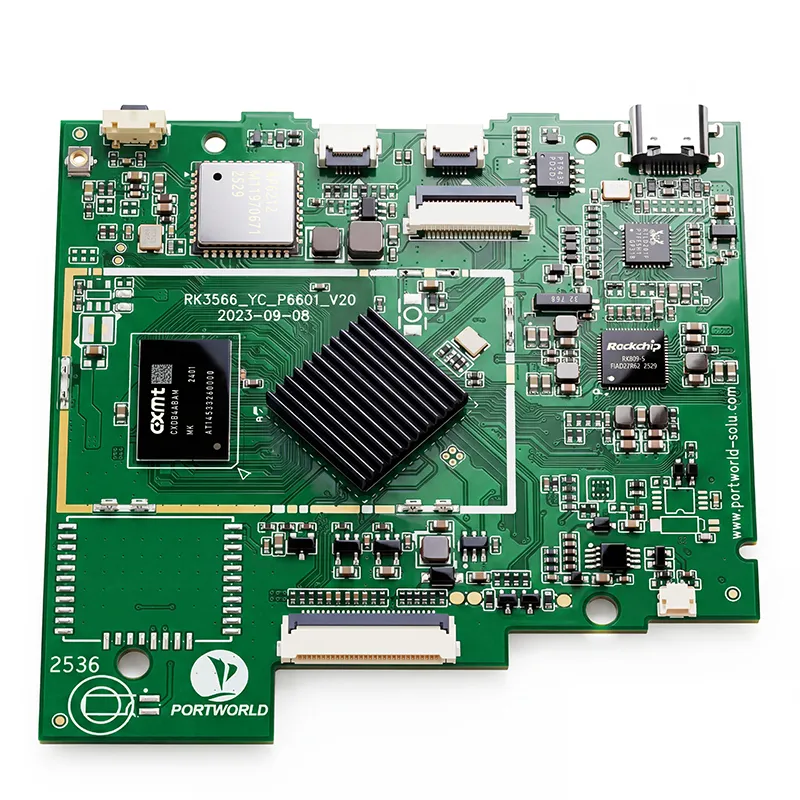
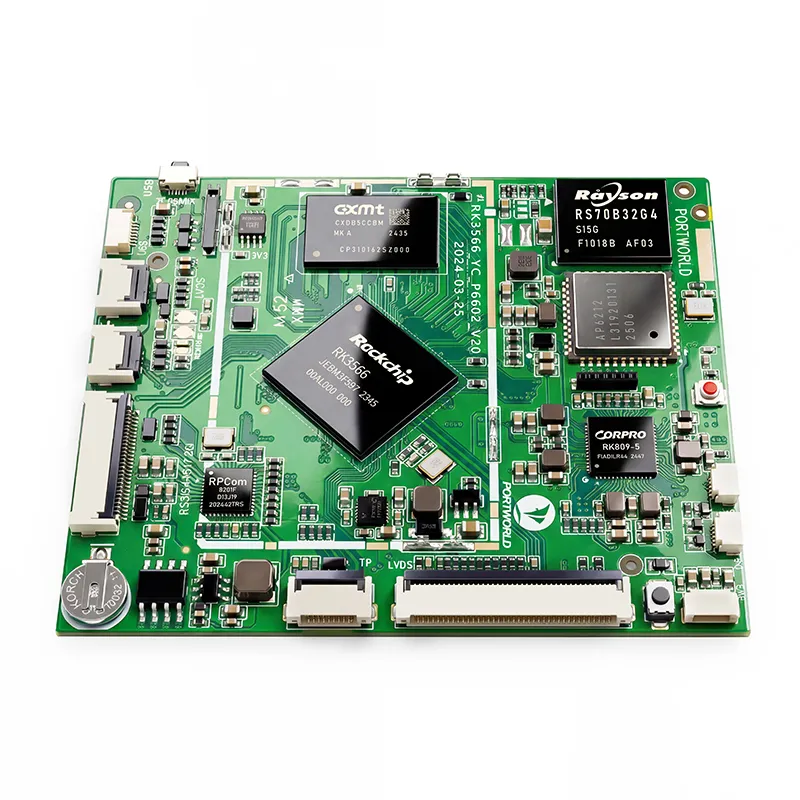
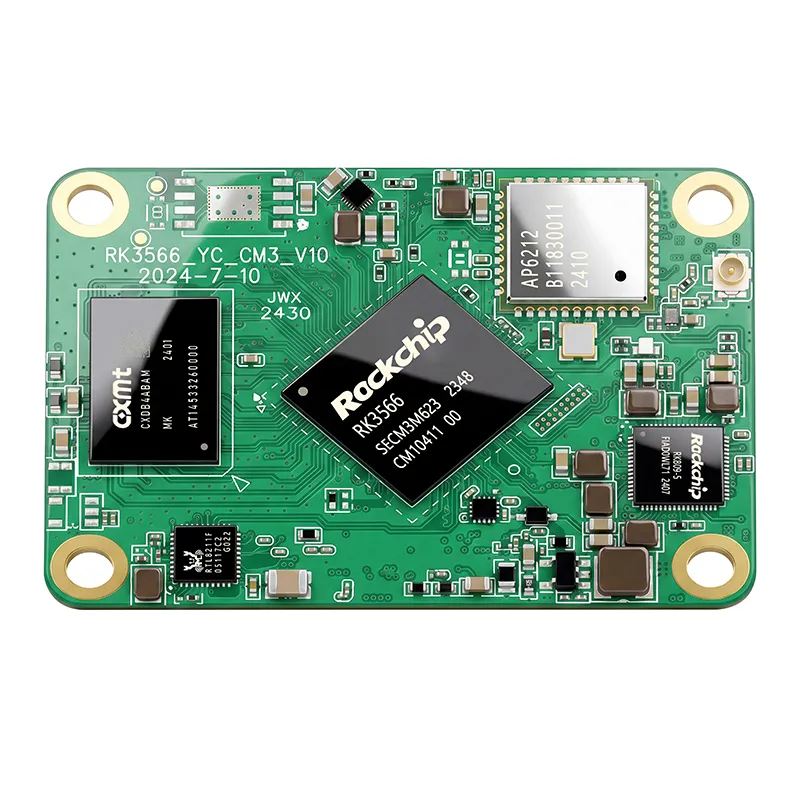
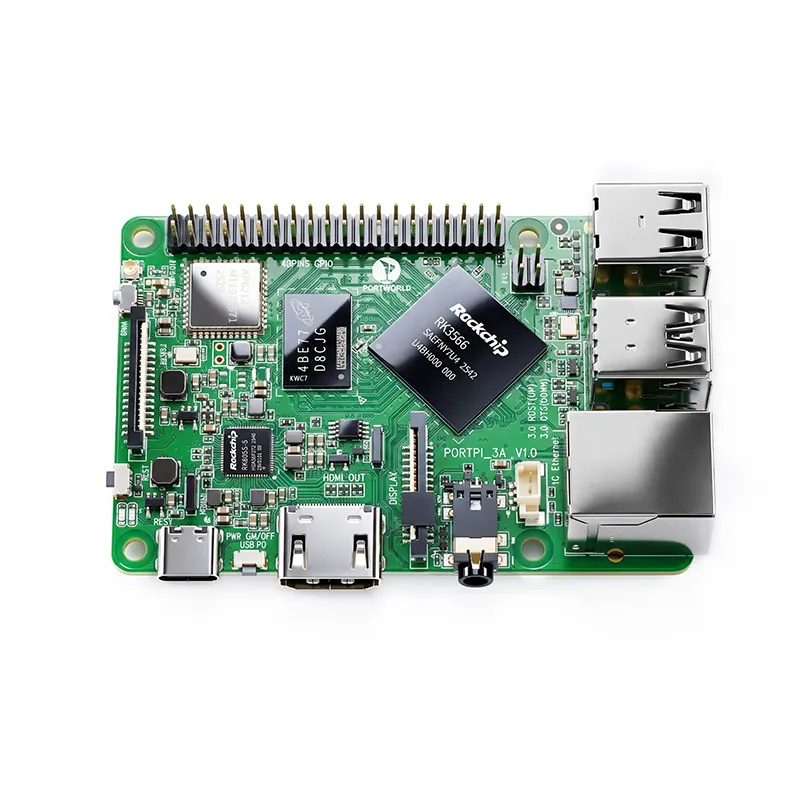
Rockchip RK3566 / RK3576 / RK3588 / RK3572 / RK3506
NVIDIA AI platforms
MediaTek MTK P8786
Espressif ESP32-P4
Intel and AMD platforms
Snapdragon and Spreadtrum solutions
The supported operating systems comprise:
Android
Linux (Ubuntu / Debian / Buildroot)
Windows
Portworld Smart Motherboard Solutions for AI Applications
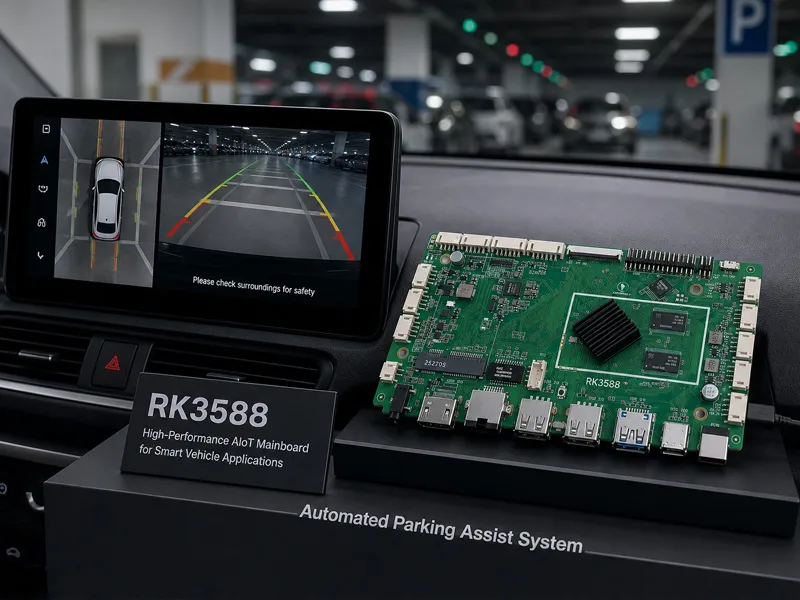
Portworld supplies AI-ready motherboard solutions across multiple sectors, including:
Industrial Automation
AI control systems, machine vision inspection, and factory automation equipment.
Robotics
Robot controllers, autonomous robots, robot dogs, and intelligent navigation systems.
Smart Retail
AI kiosks, digital signage, smart checkout systems, and interactive displays.
AI control panels, smart gateways, and connected devices.
Additionally, Portworld offers:
Custom PCB and motherboard design
Carrier board development
AI application integration
System firmware customization
Prototype development
CKD/SKD manufacturing support
Selecting a smart motherboard for AI applications necessitates a careful consideration of computing performance, AI acceleration, software compatibility, interfaces, and customization potential.
Platforms like Rockchip RK3588 and RK3576 deliver robust AI processing capabilities for edge computing, while professional OEM/ODM services enable companies to develop dependable commercial products more swiftly.